
The Nike Mid '77 Vintage
A Five-Decade Icon in Its Most Honest Form
- 1972: Nike basketball debut, named for Trail Blazers
- Courts → skate/street icon (Z-Boys '70s, Supreme/Stüssy 2000s, Abloh 2017)
- '77 Vintage: autoclave build, exposed foam tongue, vintage midsole
December 1972: The Court
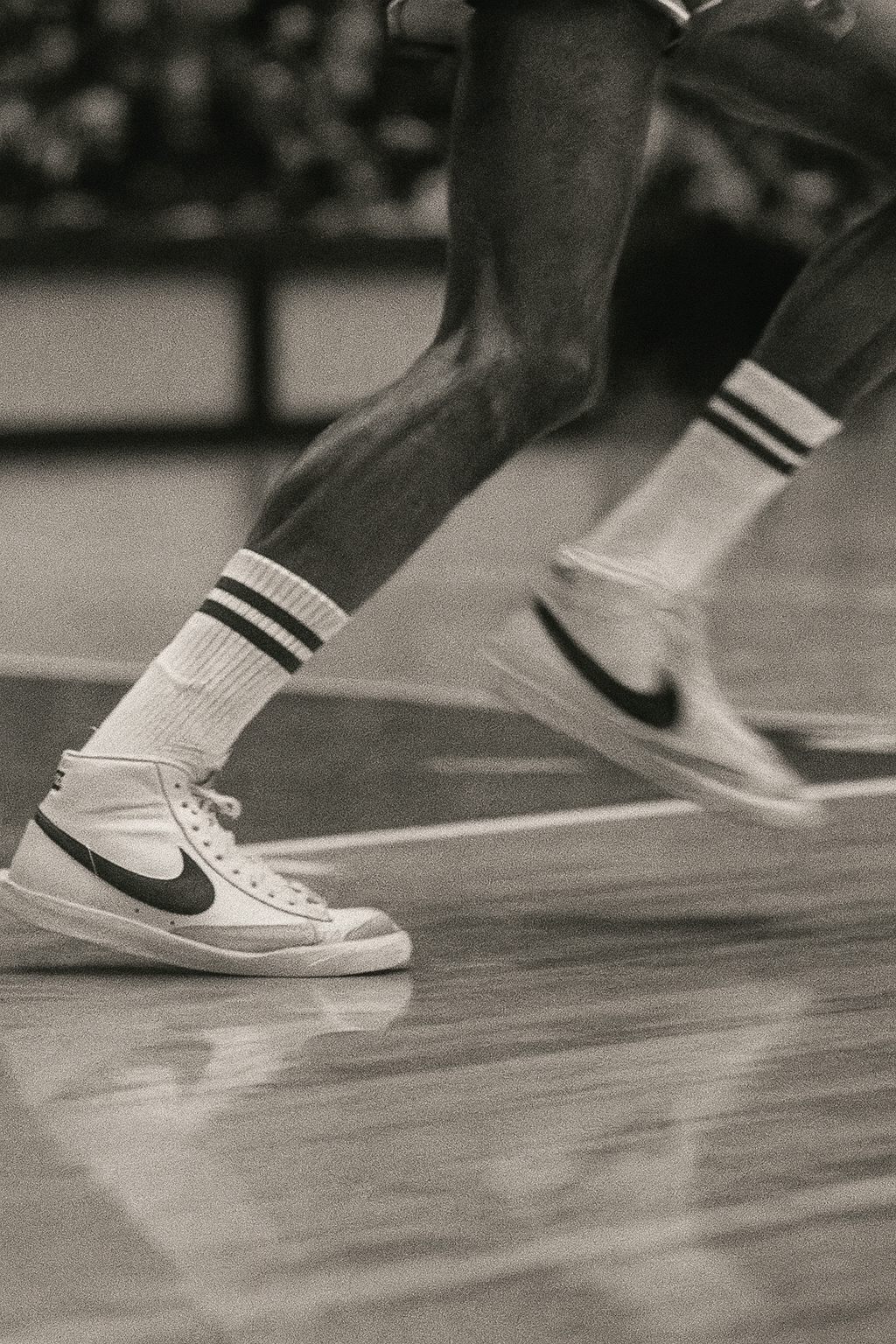
The Blazer hit NBA floors in December 1972, worn by Portland Trail Blazers players Sidney Wicks and Geoff Petrie. Retail followed in 1973, part of Nike's calculated entry into basketball at a time when the brand was still the challenger.
Nike called it "rugged and well built for the maximum in support and comfort"—straightforward performance language for a straightforward shoes. The original spec sheet read like a blueprint: finest calf leather upper, nylon tongue, vulcanized rubber sole. Japanese factories heat-bonded the outsole to the midsole in large ovens (the autoclave process), creating the slim, unified sidewall look that defines the Blazer to this day.
The Iceman Connection
George "Iceman" Gervin made the Blazer his on-court weapon, and Nike responded with one of its first player exclusives: a Blazer with "ICEMAN" stamped on the heel in place of "NIKE." It was early athlete personalization, and it signaled Nike understood the power of storytelling through product.
Launch Details:
- First on-court appearance: December 1972
- Retail launch: 1977
- Named for: Portland Trail Blazers
- Original colorways: White/Black leather; green suede team editions
- Construction method: Autoclave-vulcanized with herringbone outsole
- Designer: No single designer officially credited by Nike
What Makes a Blazer
Fifty years later, the formula is unchanged. These are the elements that make the silhouette instantly recognizable—and why deviating from them risks losing the Blazer entirely.
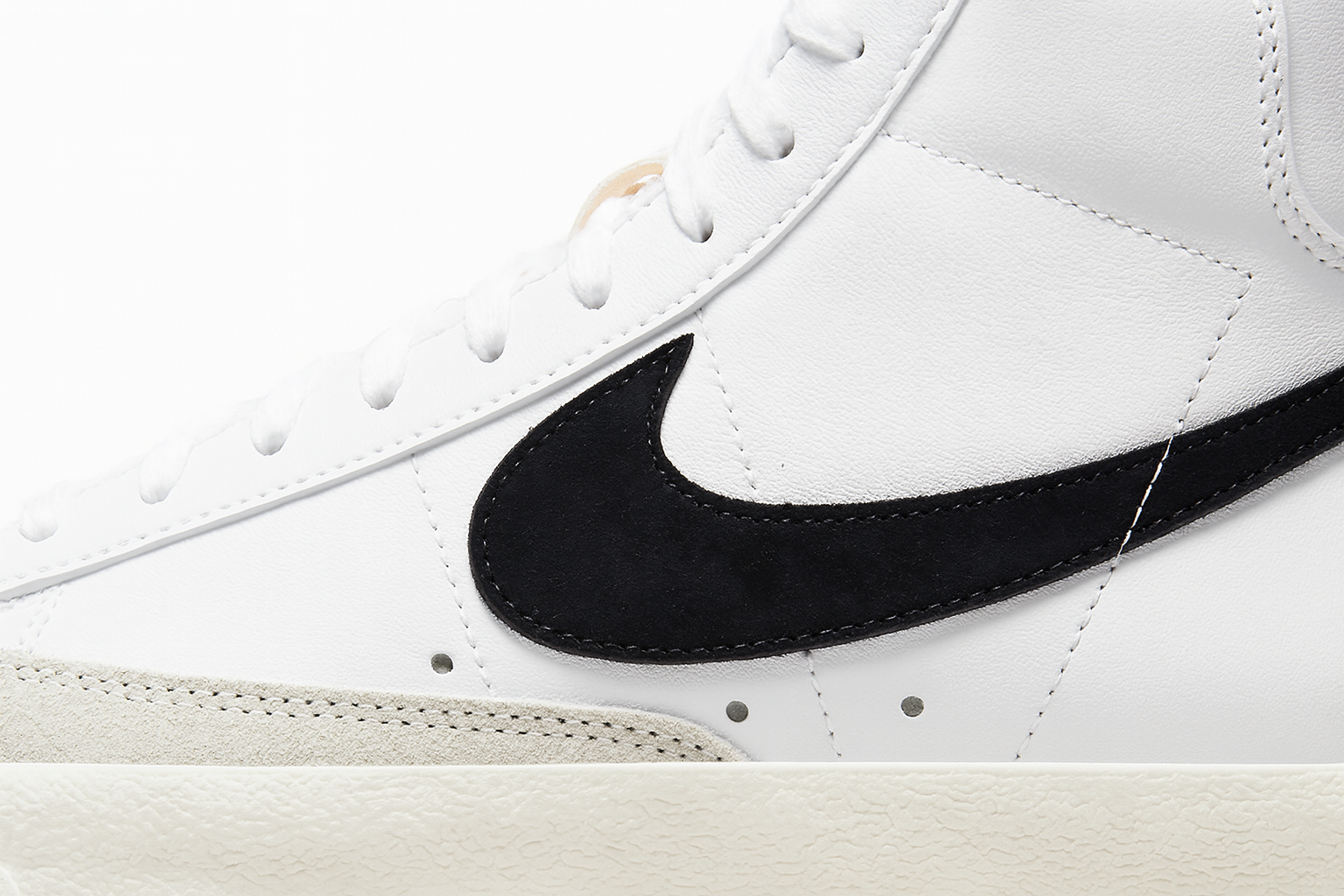
The Oversized Swoosh
Sits mid-panel and sweeps toward the heel—larger and more prominent than on most Nike basketball shoes of the era. This wasn't subtlety; it was brand visibility at game-level zoom. The large stitched Swoosh on both sidewalls became one of the Blazer's most recognizable features.
Autoclave Construction
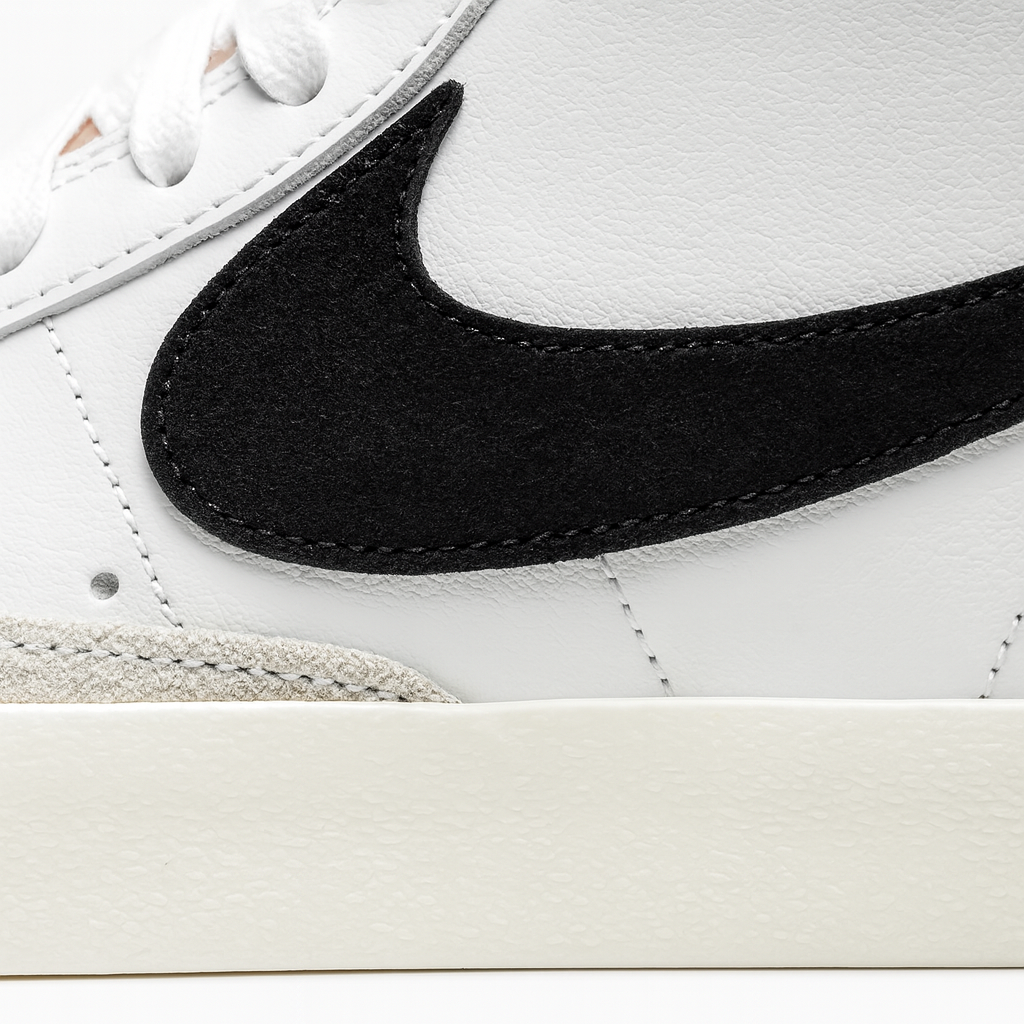
Heat-fused rubber sidewall bonded directly to the upper in vulcanizing ovens. The result: a clean, low-profile foxing tape with no visible stitching between midsole and outsole. It's a skater's dream (high boardfeel, flexibility) and a design purist's ideal (minimal, coherent).
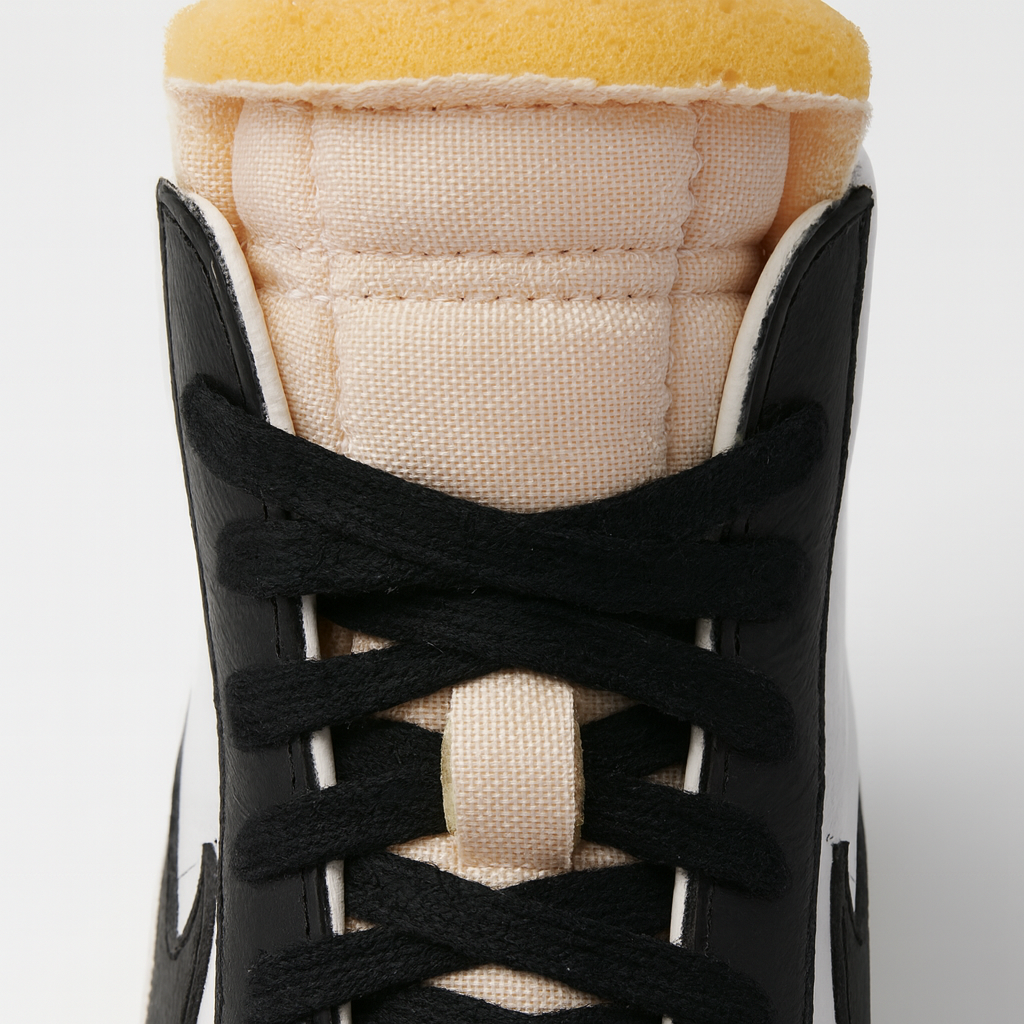
Exposed Foam Tongue
The '77 Vintage makes this explicit: raw foam edges at the top of the nylon tongue, left unfinished as a vintage aesthetic detail. You either love the deconstructed honesty or you don't—there's no middle ground.
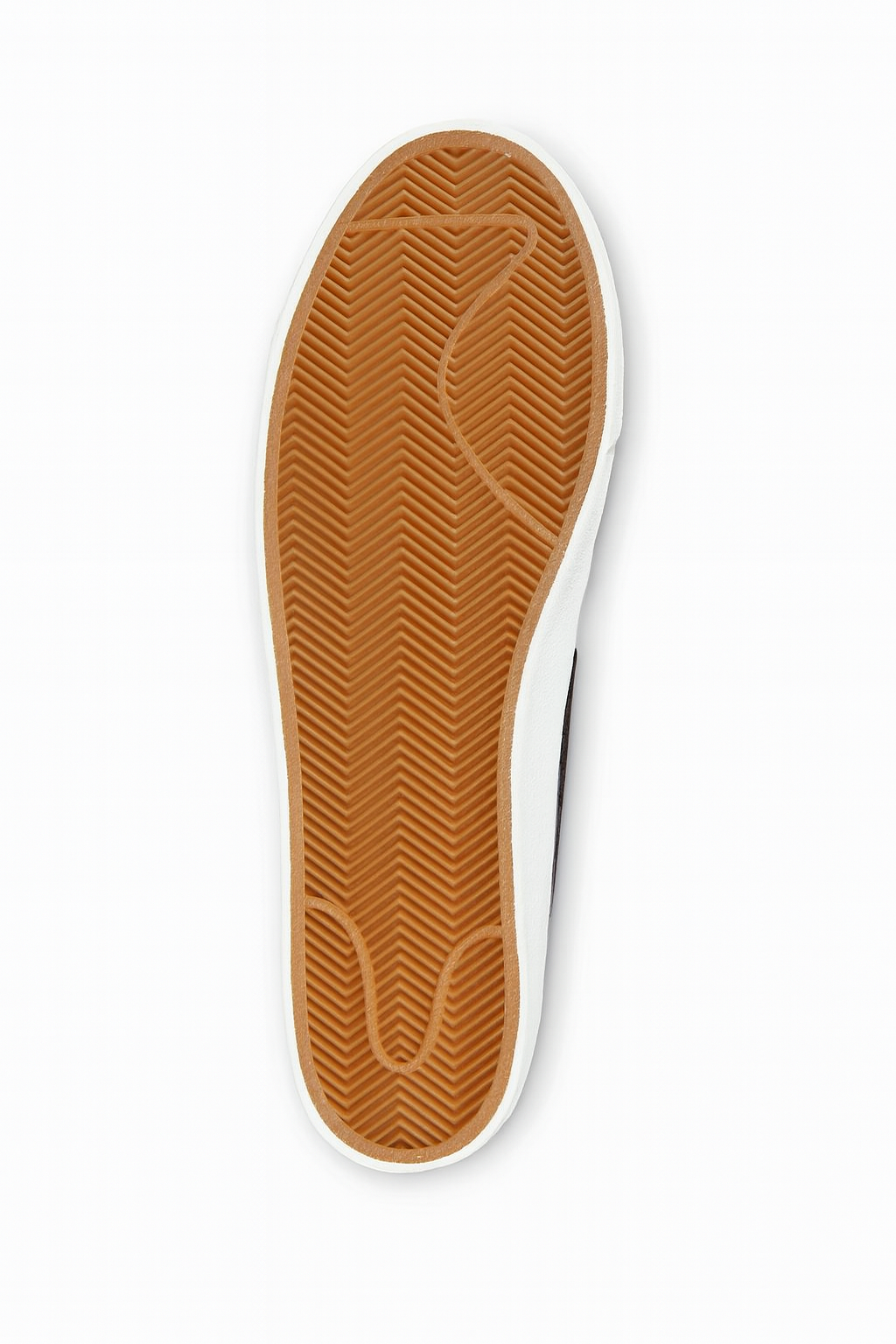
Herringbone Traction
Solid rubber outsole with the same herringbone pattern from the start. Nike's own documentation confirms the continuity. Classic grip for court or concrete.
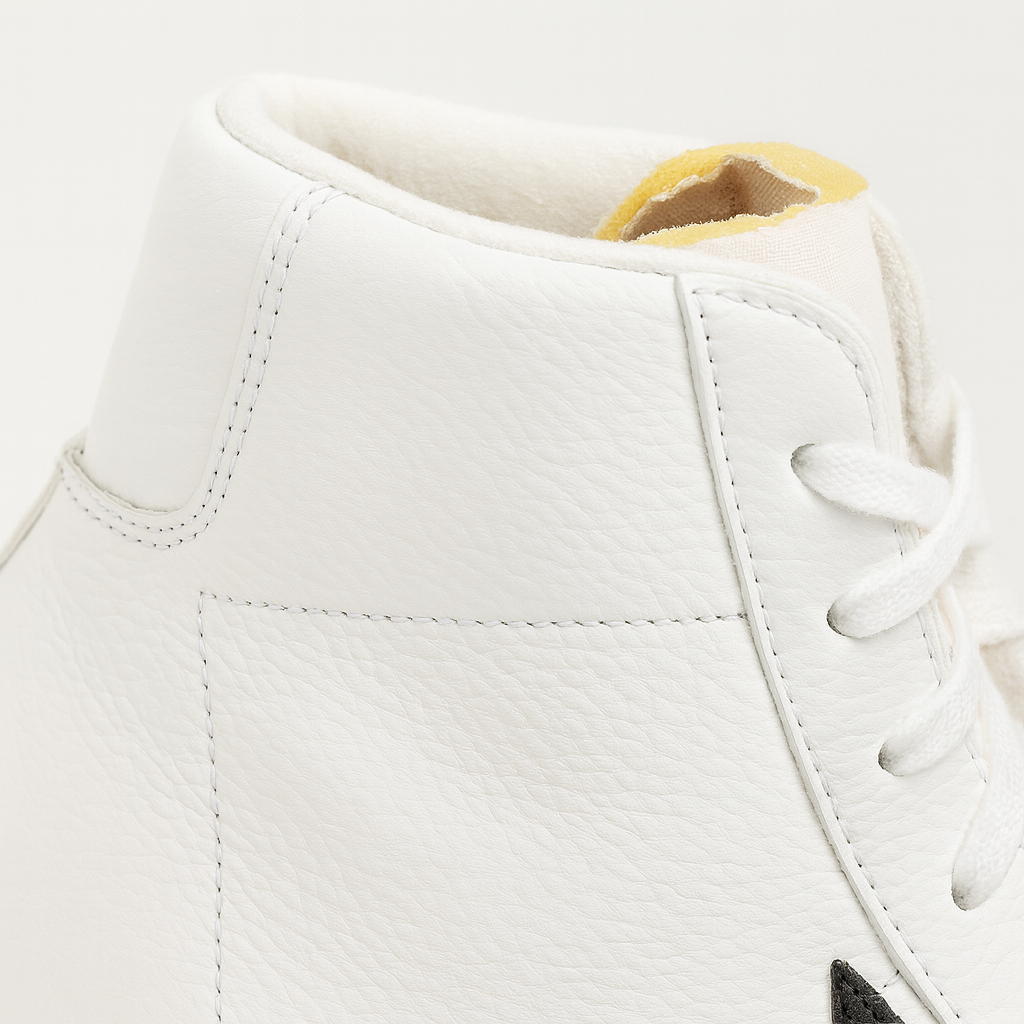
Mid-Cut Collar
Padded for ankle support without the bulk of a true high-top. The height sits between mobility and protection—ideal for transition skating and late-night city walks.
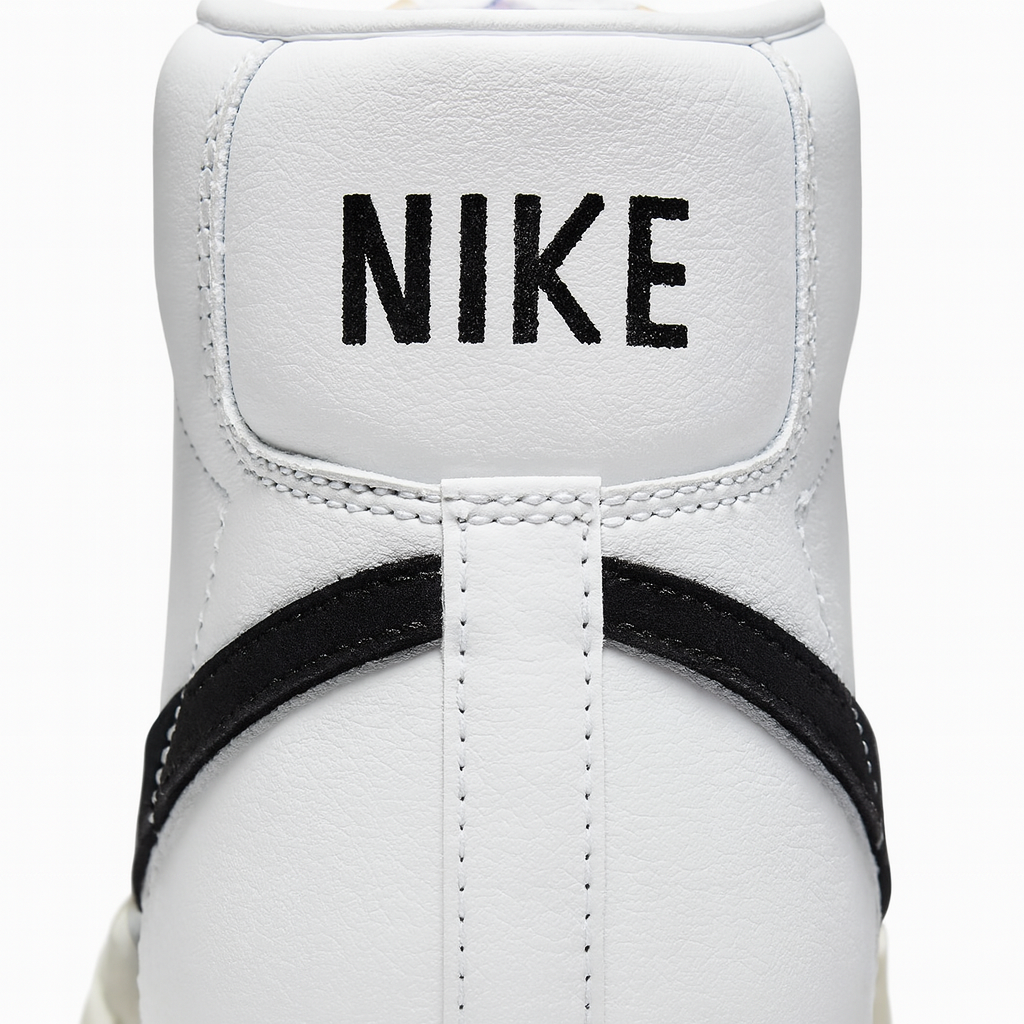
Block Heel Tab
Simple "NIKE" branding stamped on the heel, no flourish. The restraint is the point.
Late 1970s: From Hardwood to Concrete
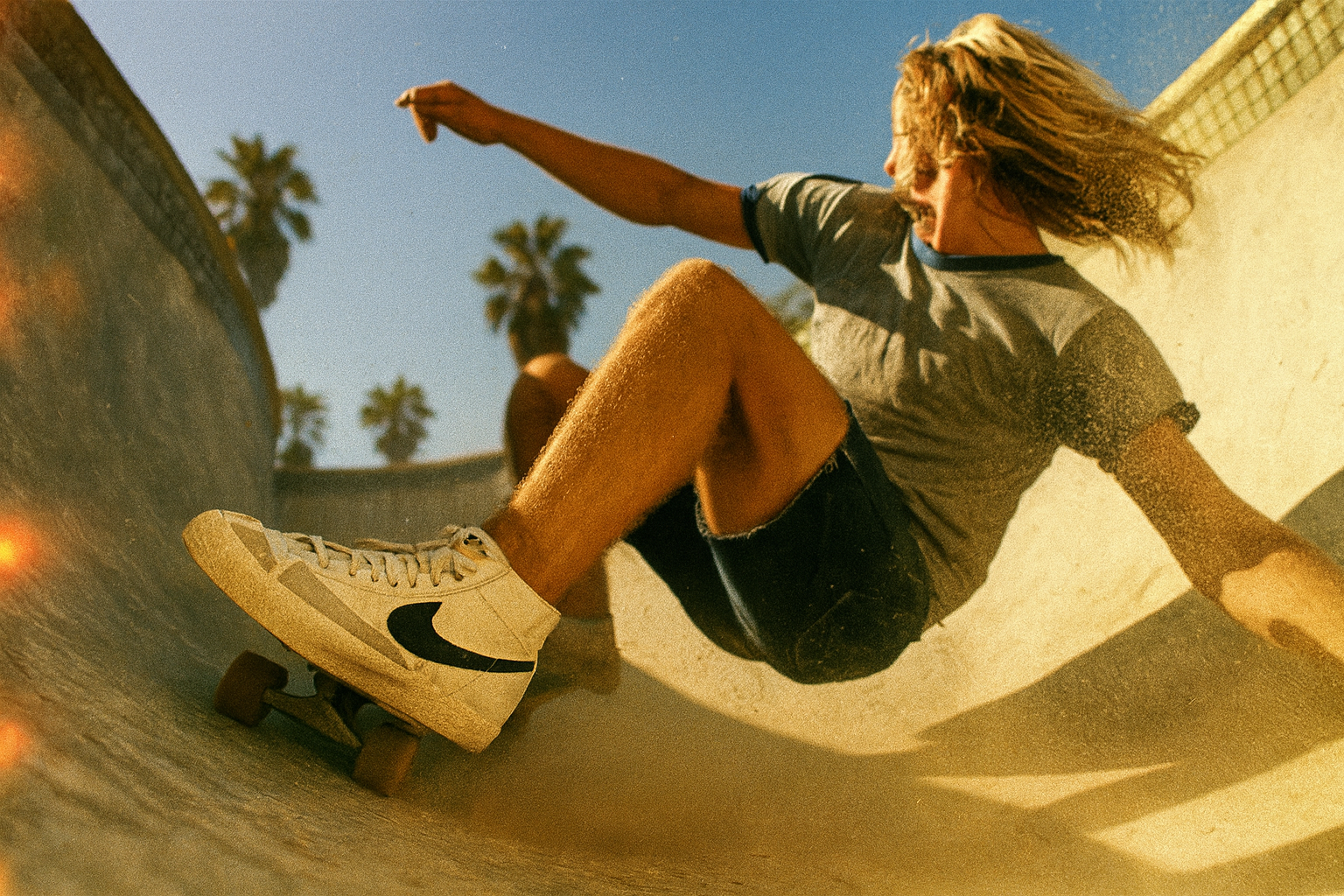
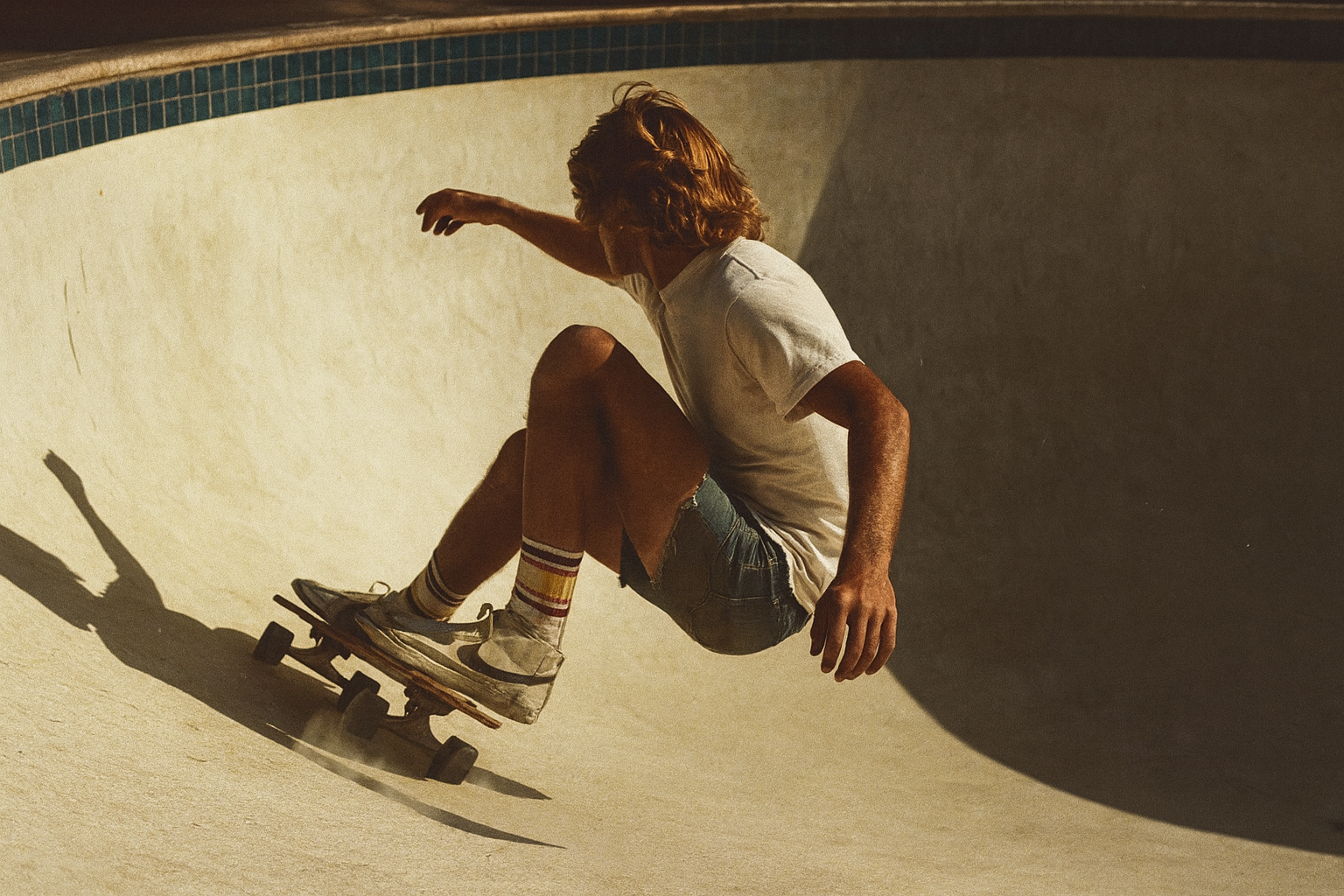
By the time basketball moved on to cushioned performance tech, skaters had already claimed the Blazer. The Z-Boys—those pool-riding pioneers who redefined what skating could be—wore whatever gripped and lasted. Shogo Kubo, one of the original Dogtown crew, skated Blazers throughout the late '70s. Lance Mountain recalls seeing "a lot of top pro guys" in Blazers when he started reading skate magazines in 1978.
The reason was mechanical: vulcanized soles delivered boardfeel and grip, while the sturdy leather/suede uppers and supportive mid-cut held up to pool coping and vert abuse. Nike didn't make the Blazer for skating—the skaters simply took it.
Nike SB: 2005
It took until 2005 for Nike to formalize what skaters had known for decades. The Nike SB Blazer debuted with Lance Mountain's input, adding a padded collar and Zoom Air insole while keeping the vulcanized sole and silhouette intact.
The Supreme × Nike SB Blazer arrived in April 2006—quilted leather, faux-snakeskin Swoosh, Gucci-inspired heel stripe —and became the collaboration that pushed the model from skate shops into streetwear conversation.
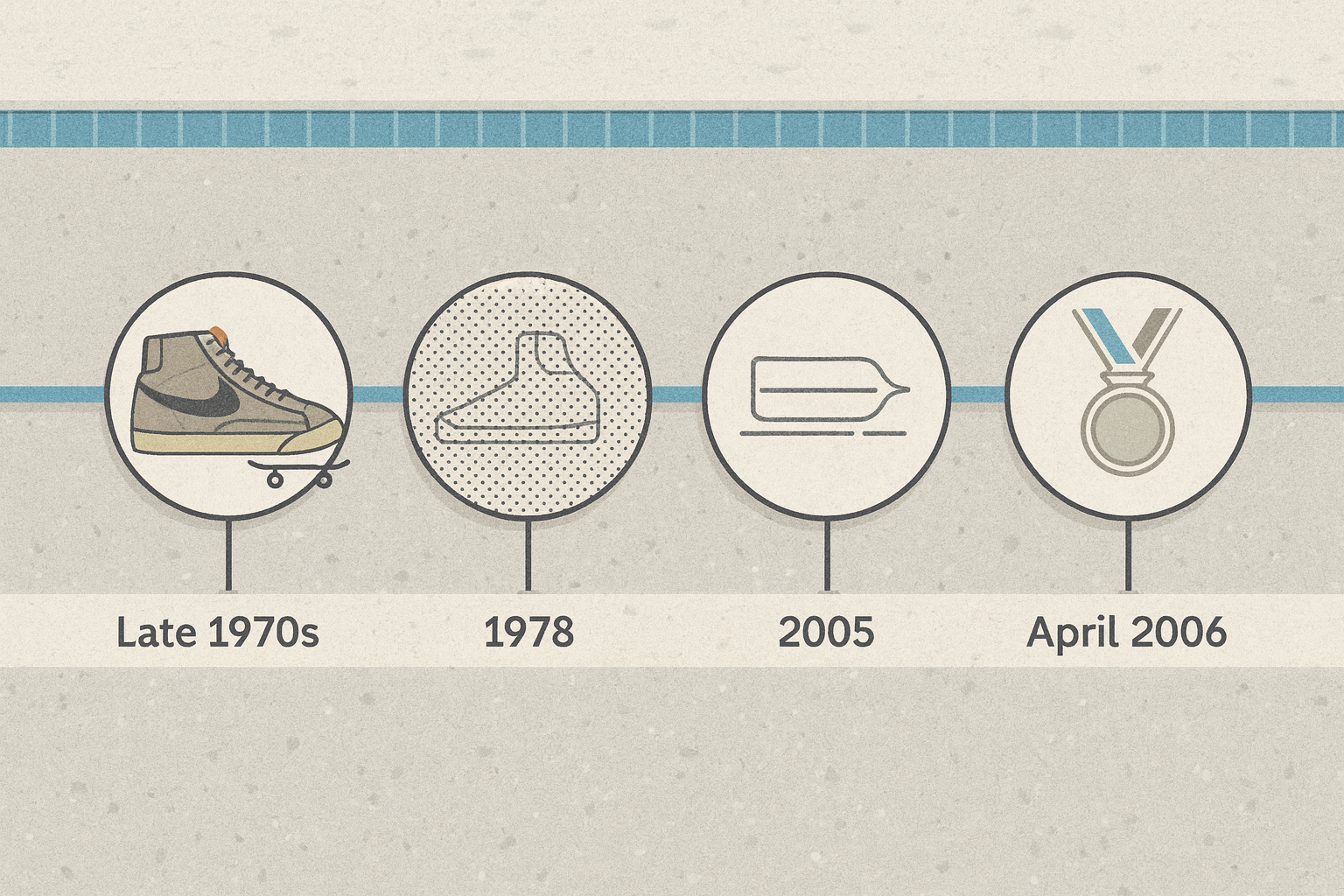
Late 1970s — THE ADOPTION
Z-Boys & Dogtown
Shogo Kubo and the Dogtown crew skate Blazers in empty pools across Southern California. Nike's basketball shoe becomes a skate essential by accident.
1978 — SPOTTED
Skate Magazine Coverage
Lance Mountain sees "top pro guys" wearing Blazers in skate mags—cementing the shoe's crossover into skate culture before Nike ever acknowledged it.
2005 — FORMALIZED
Nike SB Blazer Launch
Nike finally builds a skate-specific version with Lance Mountain: same look, added Zoom Air cushioning and reinforced collar.
April 2006 — THE TIPPING POINT
Supreme × Nike SB Blazer
Three colorways of quilted leather luxury. The collab that made the SB Blazer a streetwear grail—later spotted on Kanye West.
2007 — HONORED
Nike SB "Shogo" Blazer
A tribute release to Z-Boy Shogo Kubo, honoring the skaters who adopted the Blazer decades before Nike built them a version.
The Collaboration Era
If skaters rescued the Blazer from obscurity, collaborators made it essential. What started as boutique experiments in the early 2000s became a blueprint for how heritage models stay relevant: let the best designers in the world reinterpret the form.
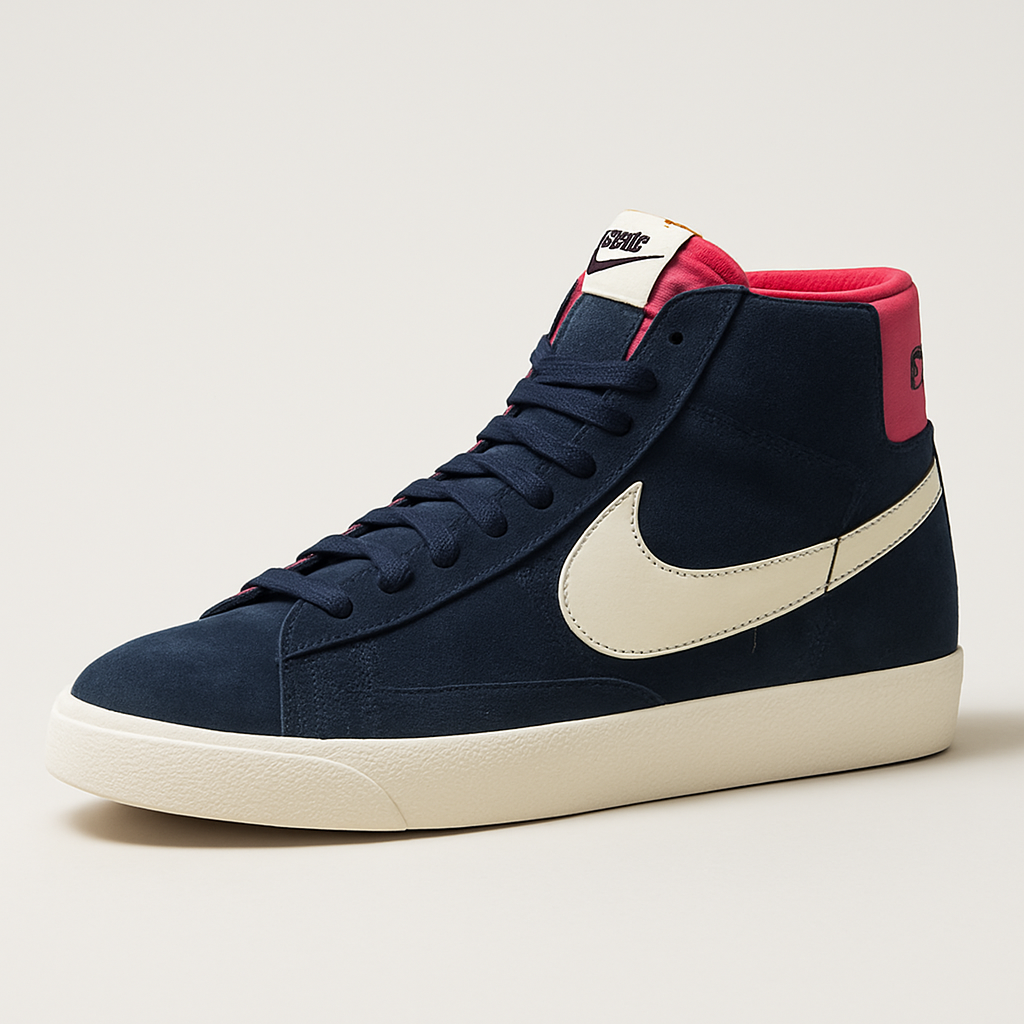
2002
Stüssy × Nike Blazer Mid
Two colorways in extremely limited numbers. One of the earliest streetwear takes on the Blazer, signaling its migration from retro hoops into the cultural zeitgeist. A blueprint for all boutique collabs that followed.
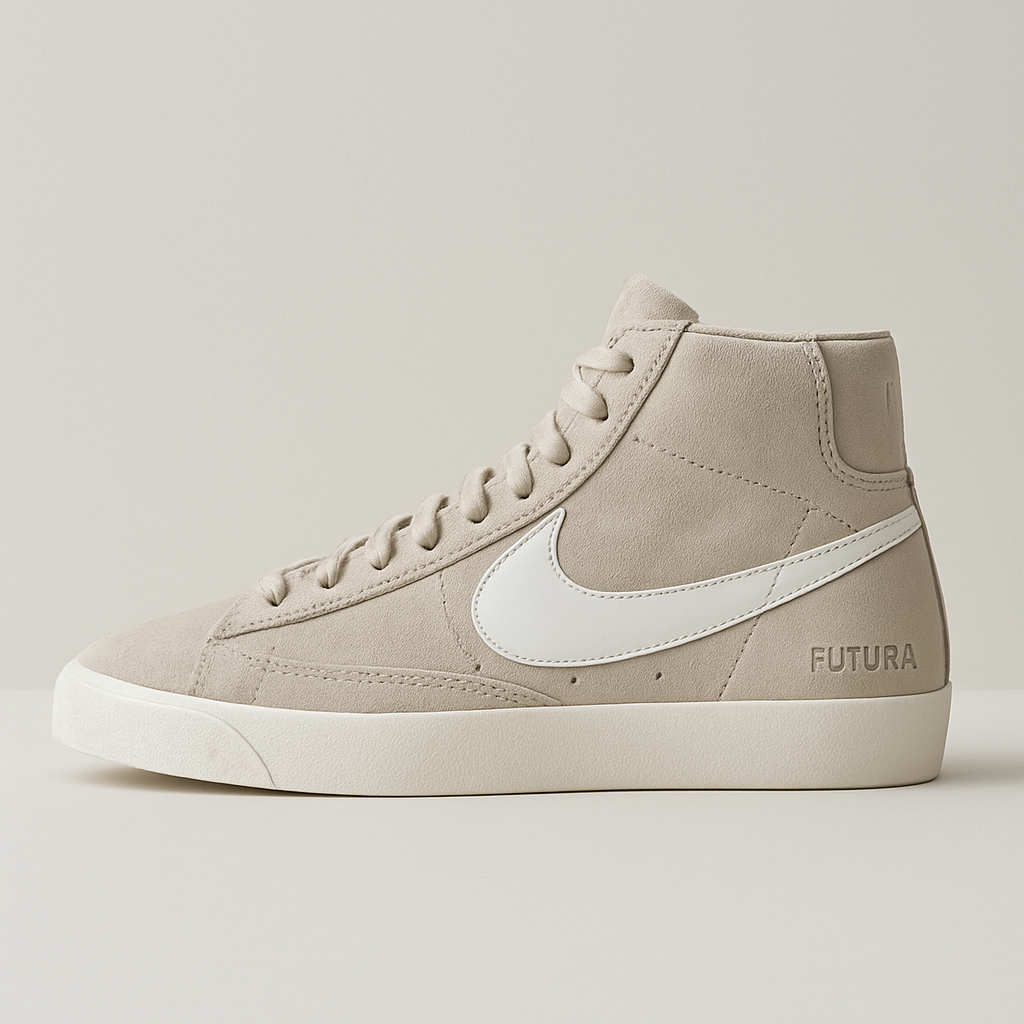
2003
Futura × Nike Blazer
Graffiti legend Futura designed a run of roughly 1,000 pairs, connecting the Blazer directly to New York's hip‑hop art lineage. A collector's grail before "grail" was overused.
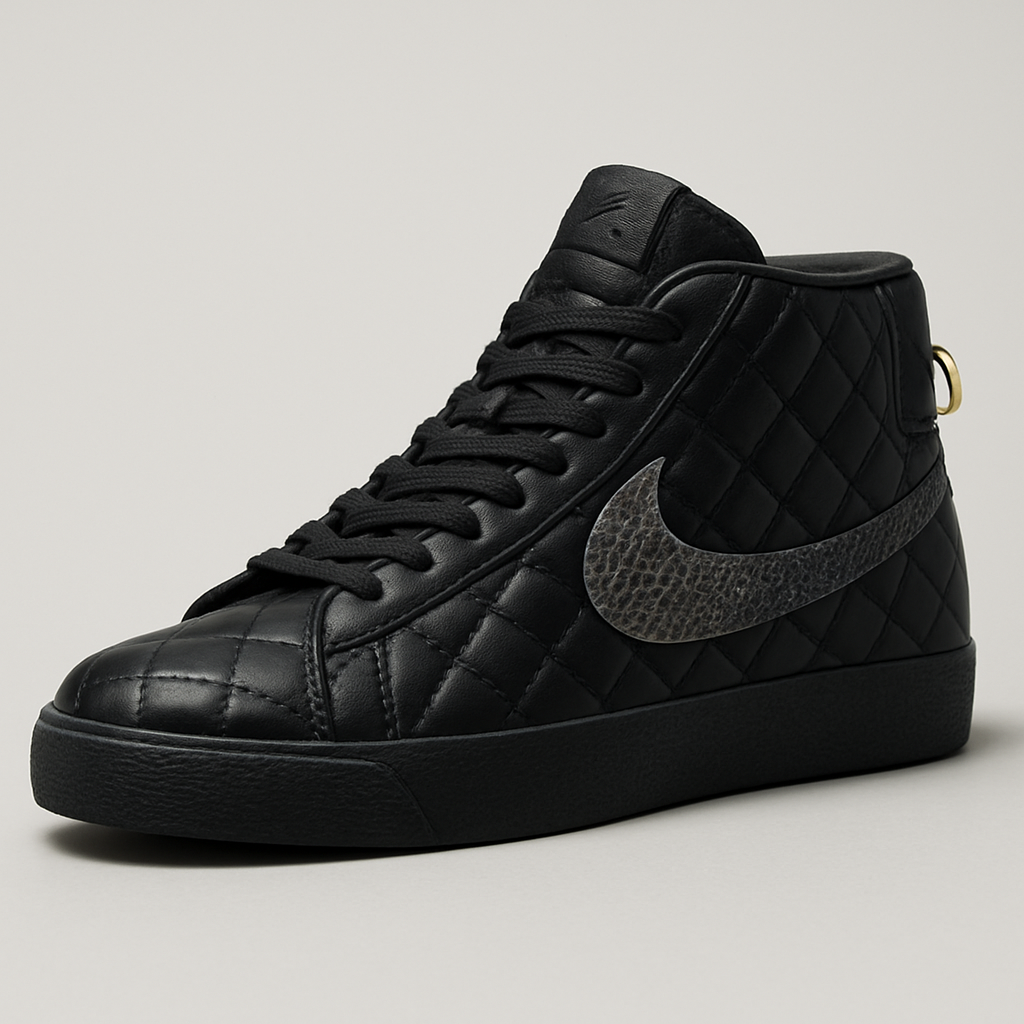
April 21, 2006
Supreme × Nike SB Blazer
Quilted leather, snakeskin Swoosh, D‑ring heel hardware. Frequently cited as the collab that elevated the SB Blazer into hype territory—Kanye West was photographed wearing the black pair. Reissued in 2022 with new colorways (Black quilted leather, Industrial Blue quilted denim).
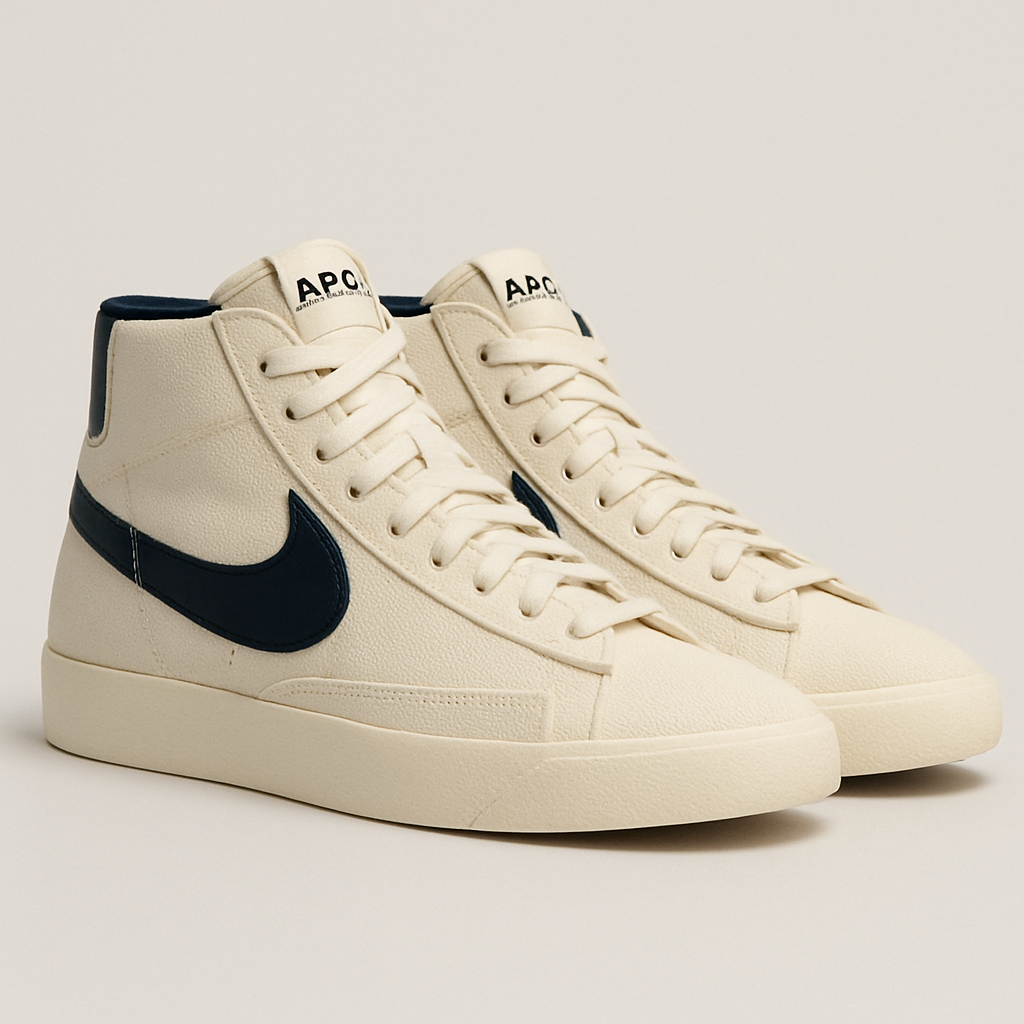
February 6, 2014
A.P.C. × Nike Blazer
Minimalist cream canvas and navy leather. French understatement applied to American sportswear. Proof the Blazer worked in fashion contexts beyond skate and street.
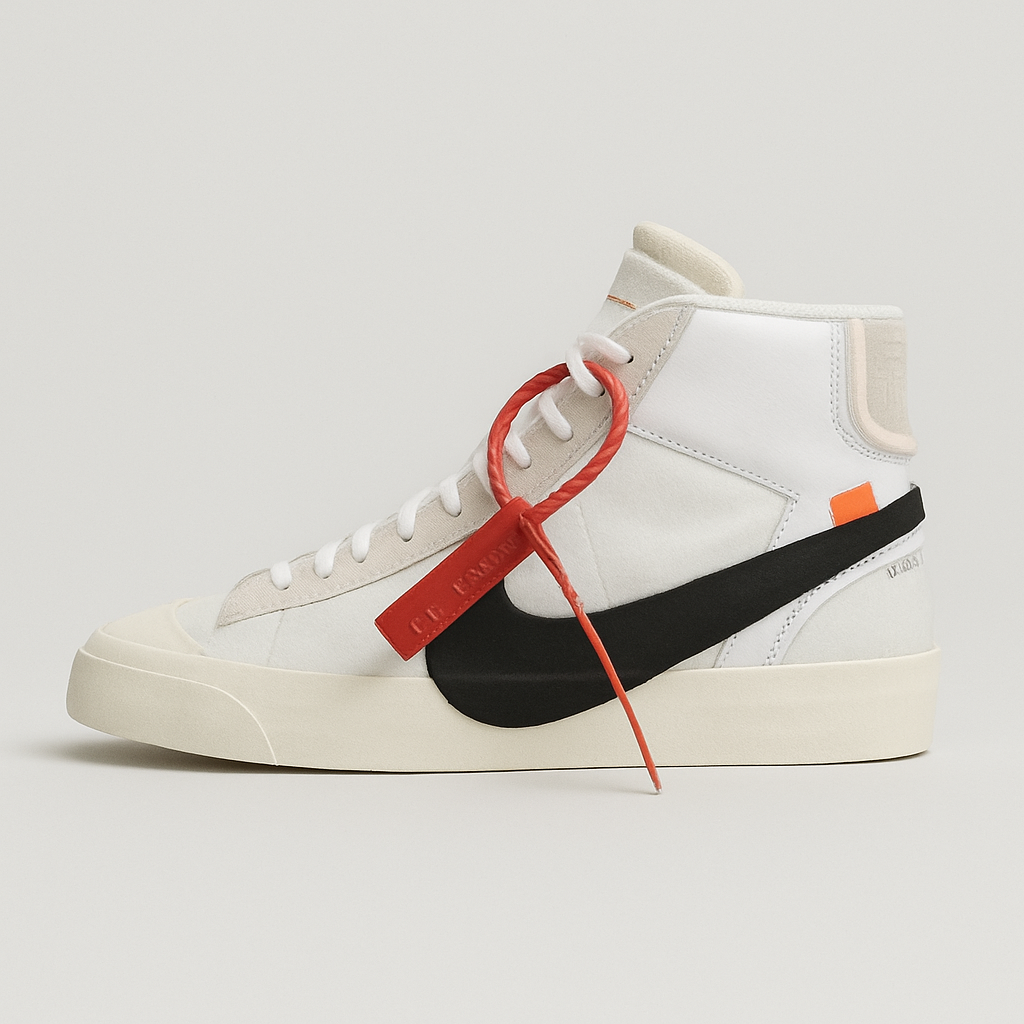
2017–2018
Off‑White × Nike "The Ten"
Virgil Abloh's deconstructed Blazer Mid, part of "The Ten" collection, repositioned the silhouette as high‑fashion commentary. The 2018 "Spooky Pack" followed, cementing the Blazer's place in the Off‑White narrative. Shifted exposed foam and added quotation‑mark branding.
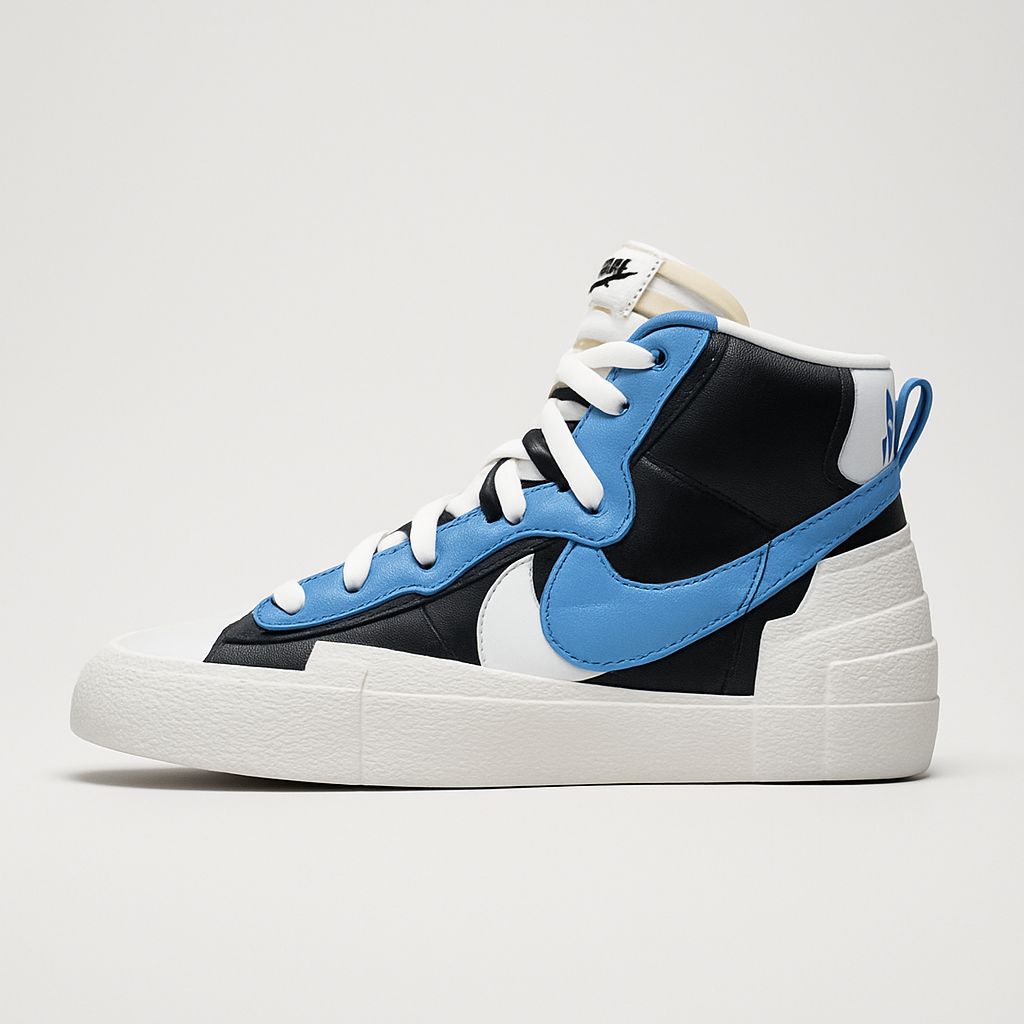
May 30, 2019
sacai × Nike Blazer Mid
Chitose Abe's hybrid design doubled Swooshes, tongues, and mudguards—a runway‑ready reconstruction that proved the Blazer could absorb radical reinterpretation. Later KAWS co‑branded editions (2021) added art‑world credibility, with four Blazer Low colorways inspired by KAWS' URGE series.
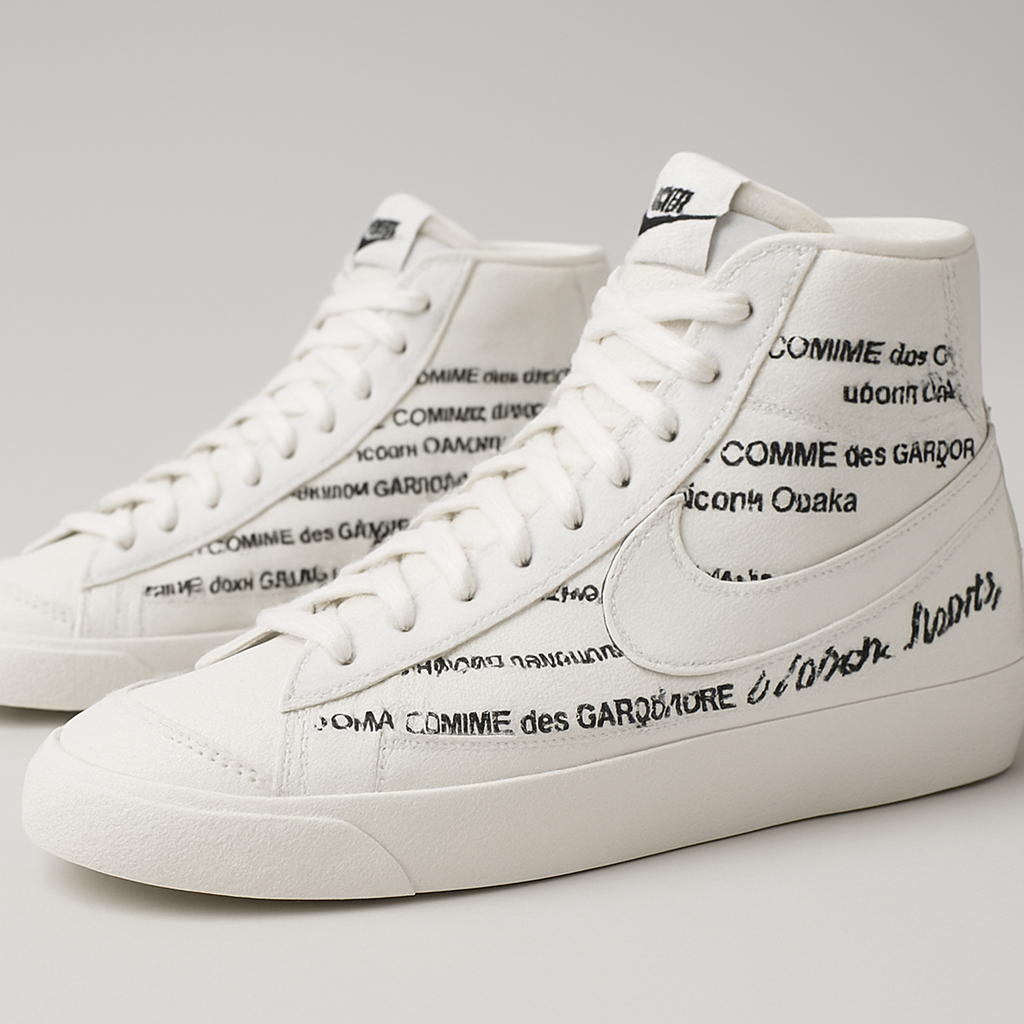
December 5, 2020
Naomi Osaka × CDG × Nike Blazer Mid '77
White canvas with "COMME des GARÇONS / Naomi Osaka" allover print and "Home Is Where the Heart Is" script. Personal storytelling met high fashion—a deeply individual take on a fifty‑year‑old silhouette.
The Collector's Case
Fifty years is a long time for a silhouette to stay in rotation. The Blazer endures not because of marketing budgets or athlete endorsements (though it had those), but because of design clarity.
It Does One Thing Extremely Well
The Blazer is a simple, clean mid‑top with a large Swoosh. That's it. No Air units to yellow, no visible tech to date it, no overly specific colorblocking that reads as "of a moment." The proportions are archetypal—which is why designers from Virgil Abloh to Chitose Abe to Hiroshi Fujiwara keep returning to it.
When a silhouette is this pure, it becomes a canvas. You can deconstruct it (Off‑White), double it (sacai), quilt it (Supreme), or leave it alone (Mid '77 Vintage)—and it still reads as a Blazer.
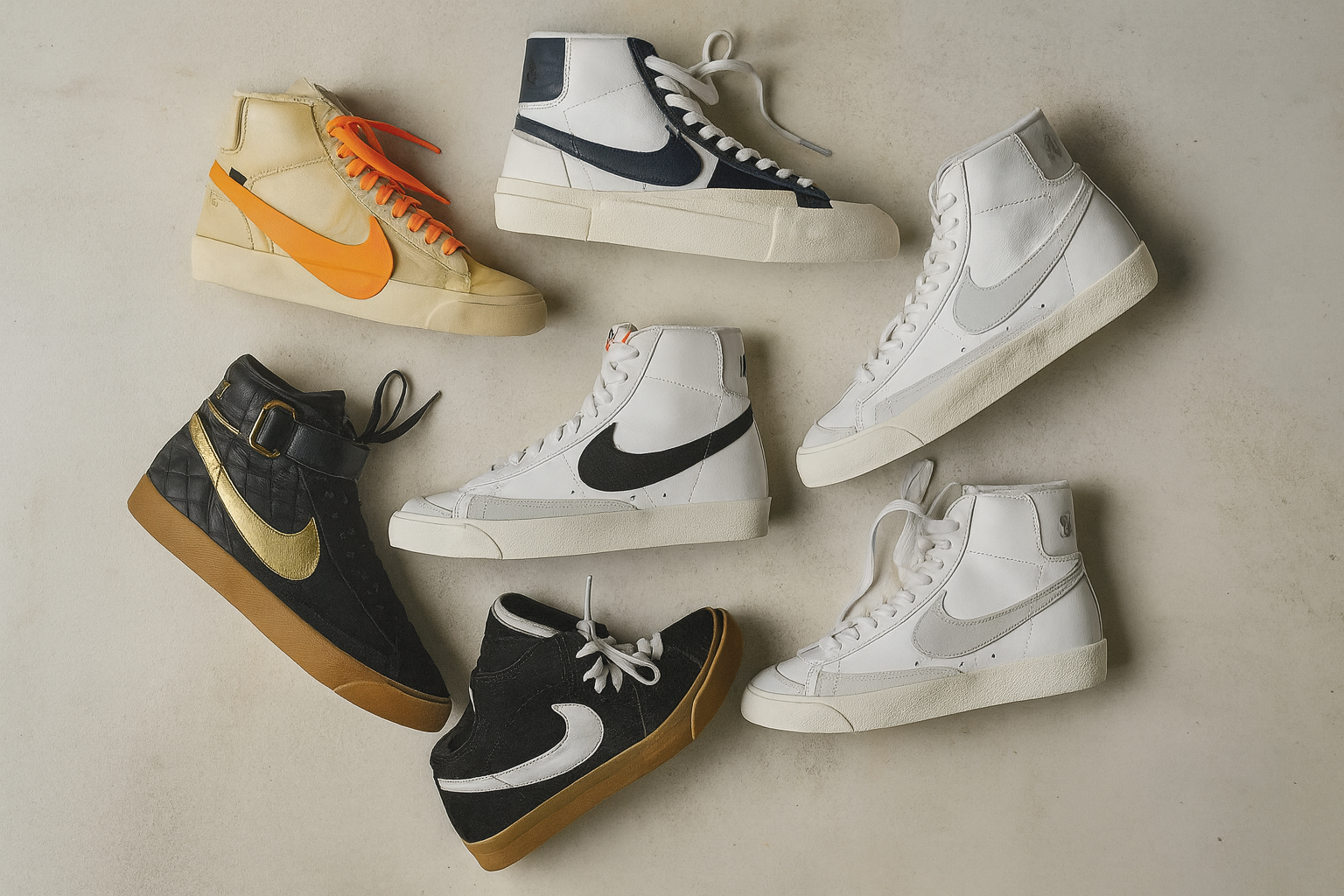
Real Heritage, Earned
This isn't retro cosplay. The Blazer appeared on NBA courts in December 1972, was adopted by Z‑Boys skaters in the late '70s, and crossed into streetwear via Stüssy and Supreme before "heritage sneaker" was a marketing category. That provenance matters to people who know.
"The Blazer is one of Nike's purest, most enduring shapes with real on‑court and skate history, an adaptable look, and a steady stream of tasteful retros and collaborations."
Versatility Without Compromise
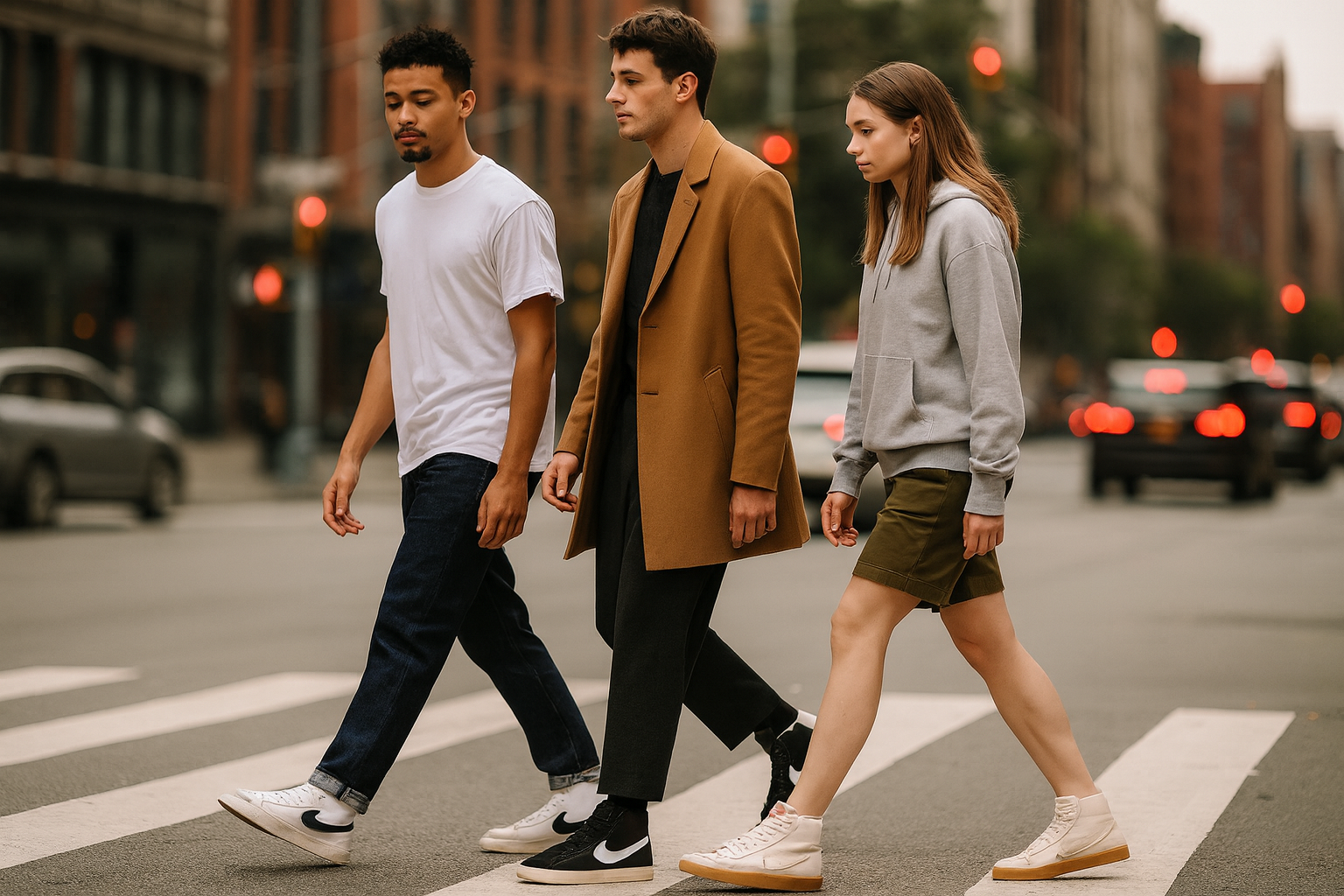
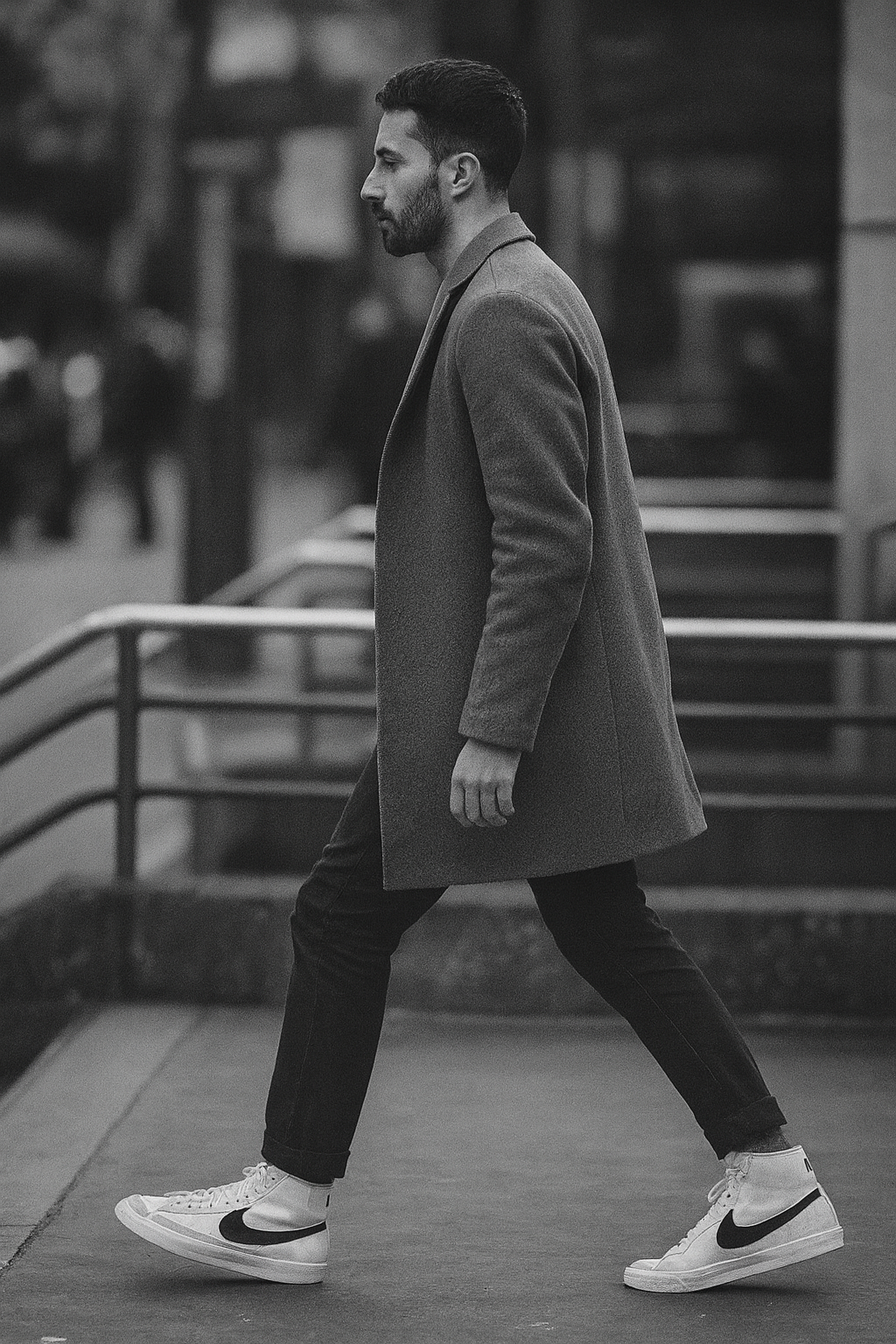
You can wear Blazers with raw denim, tailored trousers, or cargo shorts—and the shoe doesn't change character. The slim profile and restrained branding make it a chameleon, but the oversized Swoosh ensures you're never invisible.
Unlike chunkier court shoes (Air Force 1, Dunk), the Blazer's flat, narrow build pairs effortlessly with sharper silhouettes. It's the rare sneaker that works equally well with a hoodie or an overcoat.
Accessible, Not Ubiquitous
Unlike Air Force 1s (Nike's bestselling shoe of all time ), the Blazer exists in a sweet spot: widely available in general releases, but respected in collaboration form. You're not wearing what everyone else is wearing, but you're also not chasing raffle luck for a pair.
That middle ground is where taste lives.
"Fifty years later, the formula is unchanged. No Air units. No visible tech. Just clean lines, a big Swoosh, and vulcanized honesty."
Fit, Feel, and What to Expect
If you're reading this far, you're serious about the Blazer. Here's what you need to know before you buy, based on lab testing and real‑wearer feedback.

Sizing & Fit
The short version:
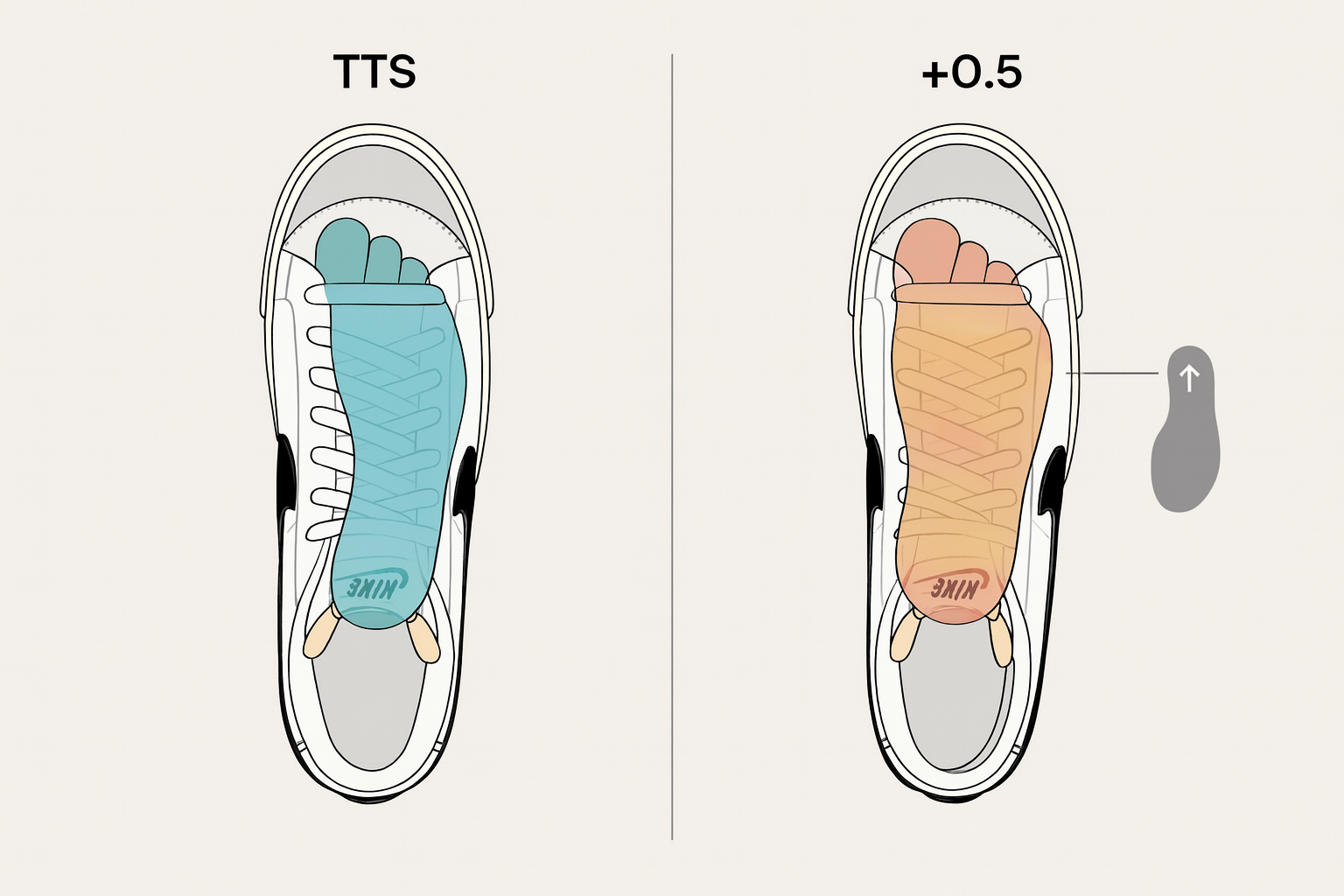
Narrow/average feet → True to size
Wide feet or high instep → Go up half a size
The details:
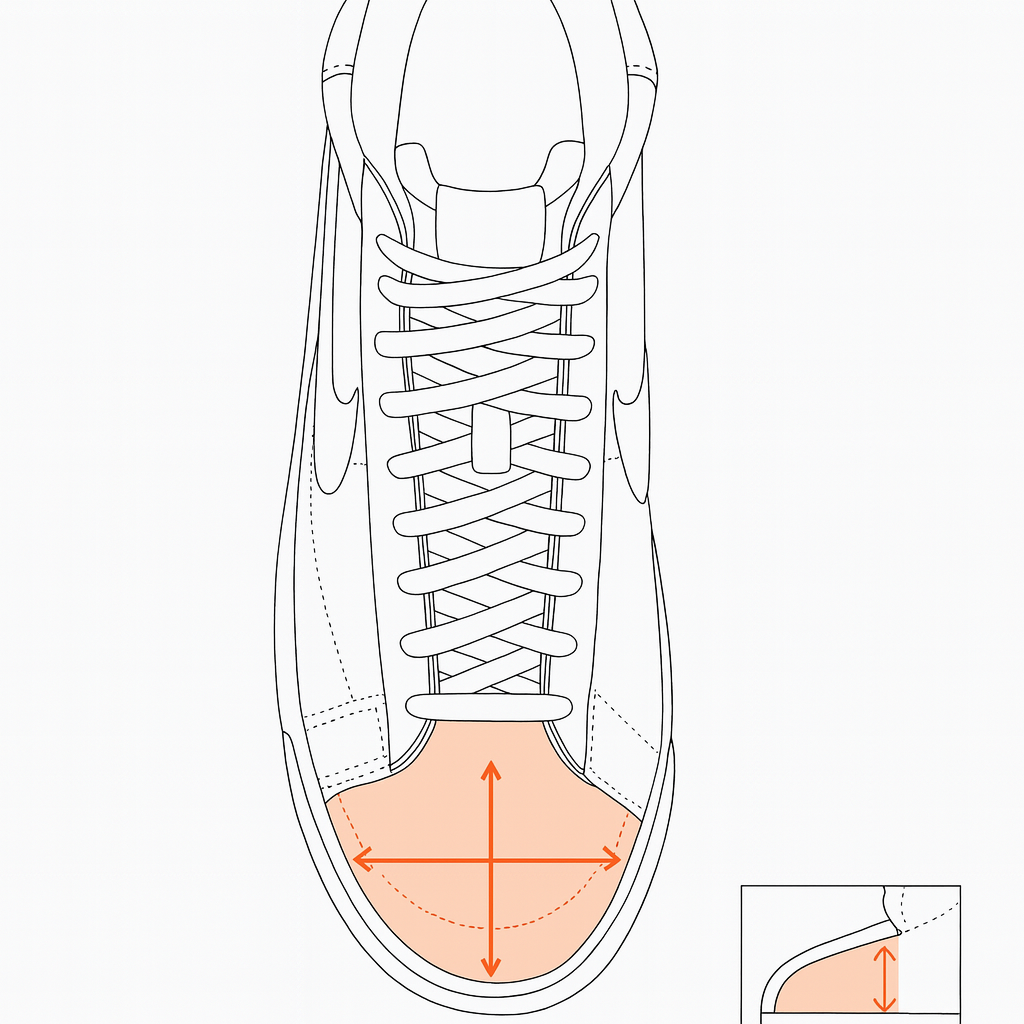
The Blazer Mid '77 Vintage fits true to length for most people, but it runs narrow through the forefoot and has a shallow toe box. Nike's own sizing FAQ notes the Blazer "tends to run half a size small" with less forefoot volume than an Air Force 1.
Entry tip: The tall, snug collar makes getting your foot in tight. Lace your Blazers loosely for easier on/off. Many wearers describe the lacing as "fussy"—plan for an extra 30 seconds per shoe.

Break‑In Period
Expect stiffness out of the box. The leather upper and padded collar need time to conform to your foot. Most wearers report:
- First few days: Noticeable stiffness, potential heel rub
- After 1–2 weeks: Shoe softens considerably
- Pro tip: Wear thick crew socks during break‑in to protect your Achilles
The break‑in period can be significant—many owners report initial discomfort that improves substantially with wear. Once broken in, the shoe becomes more versatile for everyday styling.

Comfort & Cushioning
This is a flat, minimal‑cushion shoe. Stack height is low (~17.5mm heel / ~11.5mm forefoot), and the insole is thin (~3.9mm).
Good for:
- Short‑to‑moderate wear
- Style‑first situations
- Skating (SB Zoom Blazer version preferred for Zoom Air)
Not ideal for:
- All‑day walking
- Standing for hours
- High‑impact activity
The insole is removable on most recent pairs if you want to add orthotics or aftermarket cushioning. Ground feel is high—you'll feel texture underfoot. That's the point.
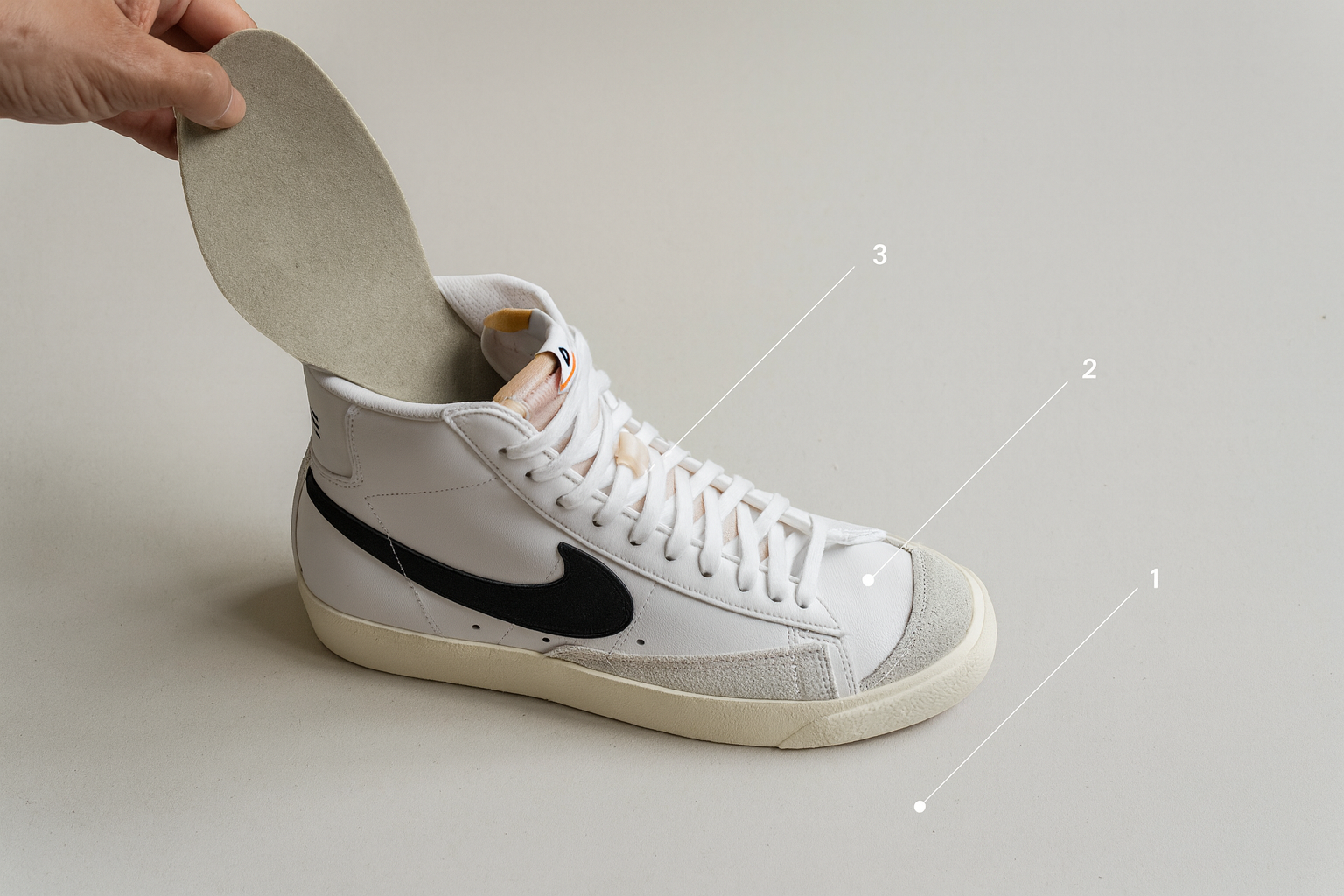

Materials & Durability
- Upper: Real leather on main panels, synthetic lining, suede overlays
- Breathability: Low—few perforations. Better for cooler weather.
- Toebox durability: Lab abrasion tests scored 5/5
- QC note: Some wearers report variable leather quality or early sole separation, particularly at the toe flex points. Inspect your pair on arrival. Not recommended as a daily beater in harsh conditions.
Real owner experiences vary: while many praise the classic aesthetic and durability with proper rotation, others report sole separation issues after weeks to months of heavy daily wear. Quality can vary—treat these as a rotation shoe, not your only pair.
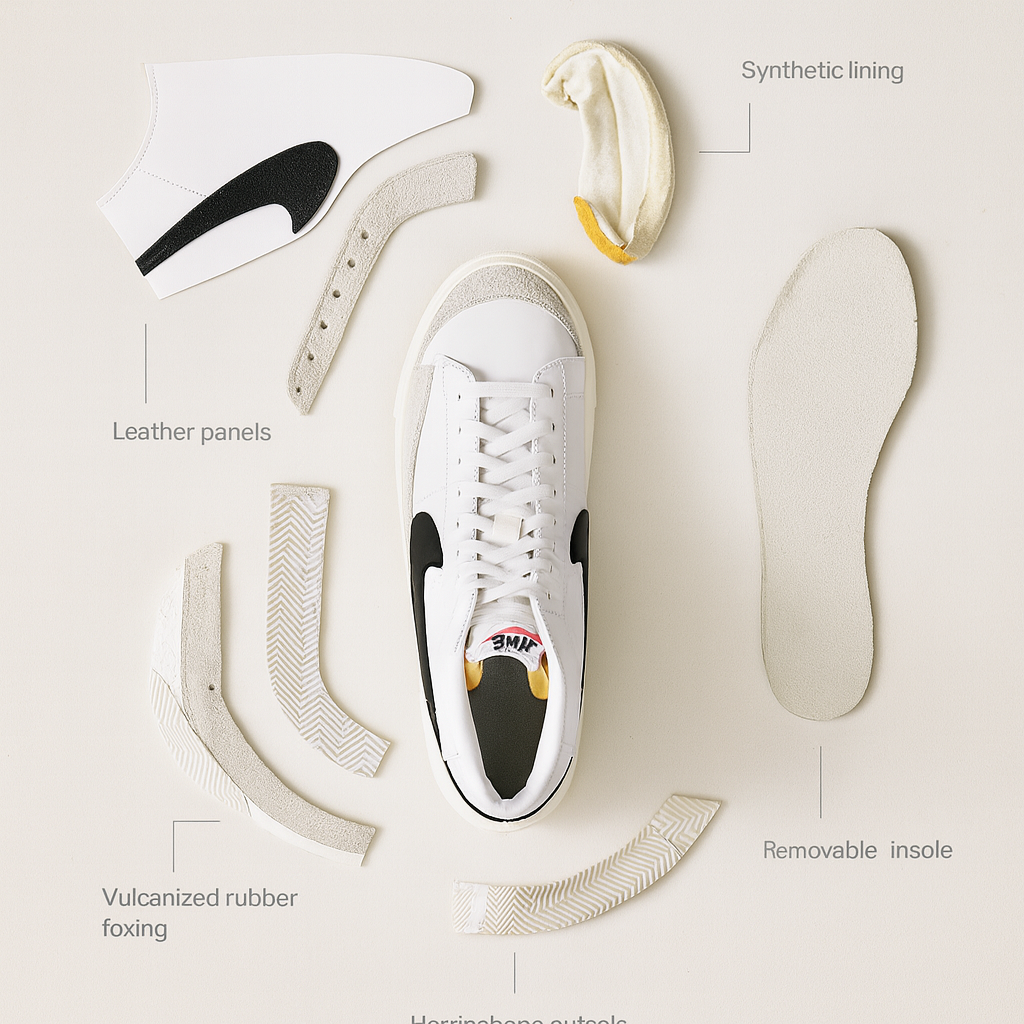

The Exposed Foam Tongue
The raw foam edge is by design as a vintage aesthetic detail. The deconstructed look is polarizing—you'll either love the vintage authenticity or wish Nike had finished the edge. There's no in‑between.

Who This Shoe Is For
- Collectors who value heritage and design purity
- People who prioritize looking good over feeling cushioned
- Fans of vulcanized, flat‑soled sneakers (Vans, Converse wearers will understand the vibe)
- Anyone building a capsule wardrobe around timeless, versatile pieces

Who Should Look Elsewhere
- Wide‑footed buyers unwilling to size up
- People seeking all‑day comfort or athletic performance
- Those who want breathable summer sneakers
- Anyone expecting instant, out‑of‑the‑box comfort
Quick Sizing Decision Tree:
Do you have narrow or average‑width feet?
→ Yes: Order your true size
→ No (wide feet): Go up half a size
Do you prioritize comfort over aesthetics?
→ Yes: Consider the Nike SB Zoom Blazer instead (Zoom Air cushioning)
→ No: You're in the right place
Are you willing to break the shoe in?
→ Yes: Buy with confidence
→ No: These aren't for you
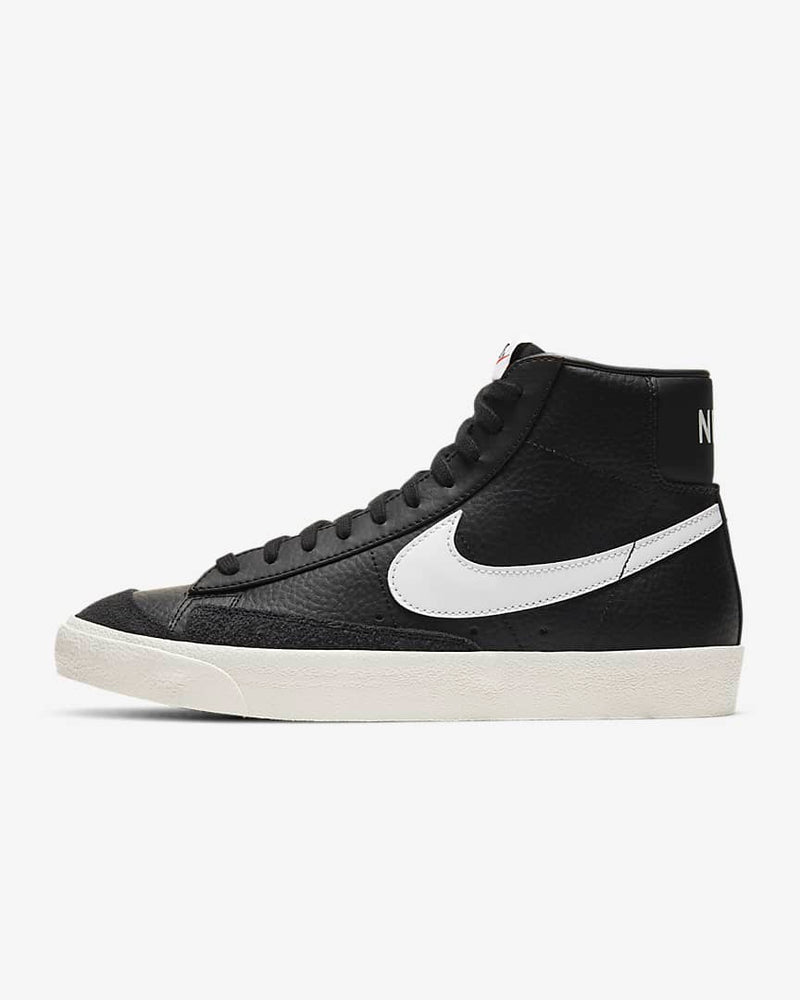
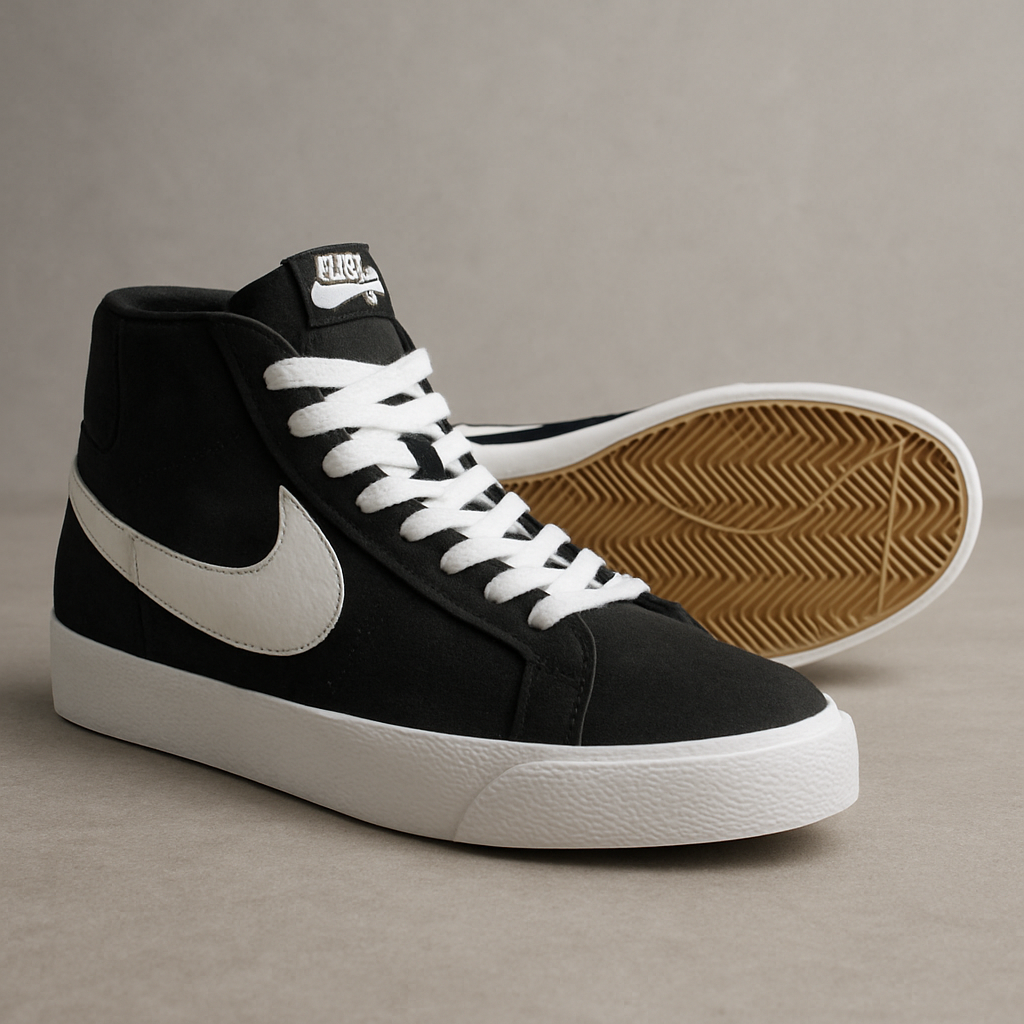
Nike Blazer Mid '77 Vintage
£234.00
Available Colorways:
Technical Specs at a Glance:
- Construction: Autoclave vulcanized
- Upper: Leather and synthetic with suede overlays
- Midsole: Vintage Sail finish
- Outsole: Solid rubber herringbone
- Tongue: Exposed foam (deconstructed)
- Fit: True to size (narrow fit; wide feet size up 0.5)
Continue Your Research
Related Silhouettes
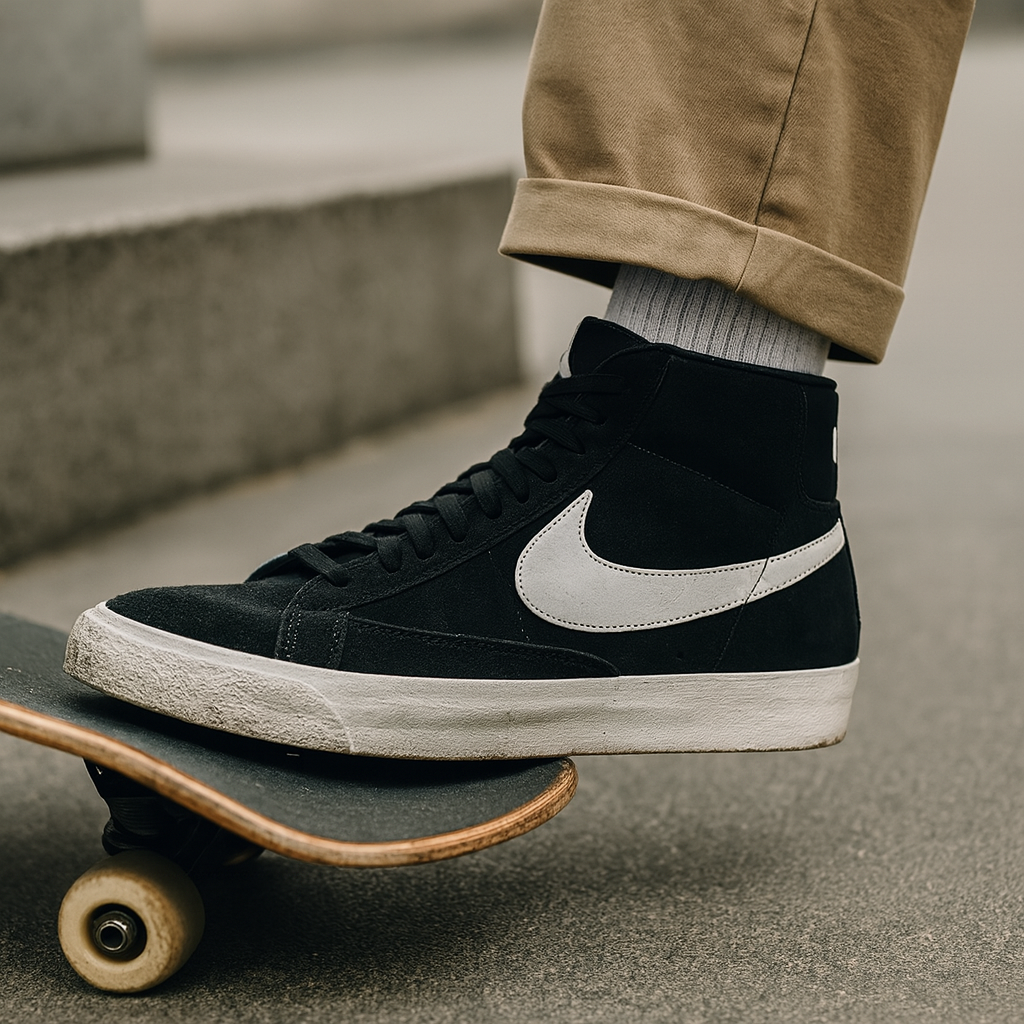
Nike SB Zoom Blazer Mid
Same iconic look, skate‑specific upgrades: Zoom Air cushioning, reinforced suede, tackier rubber. For those who want the aesthetic with modern comfort.
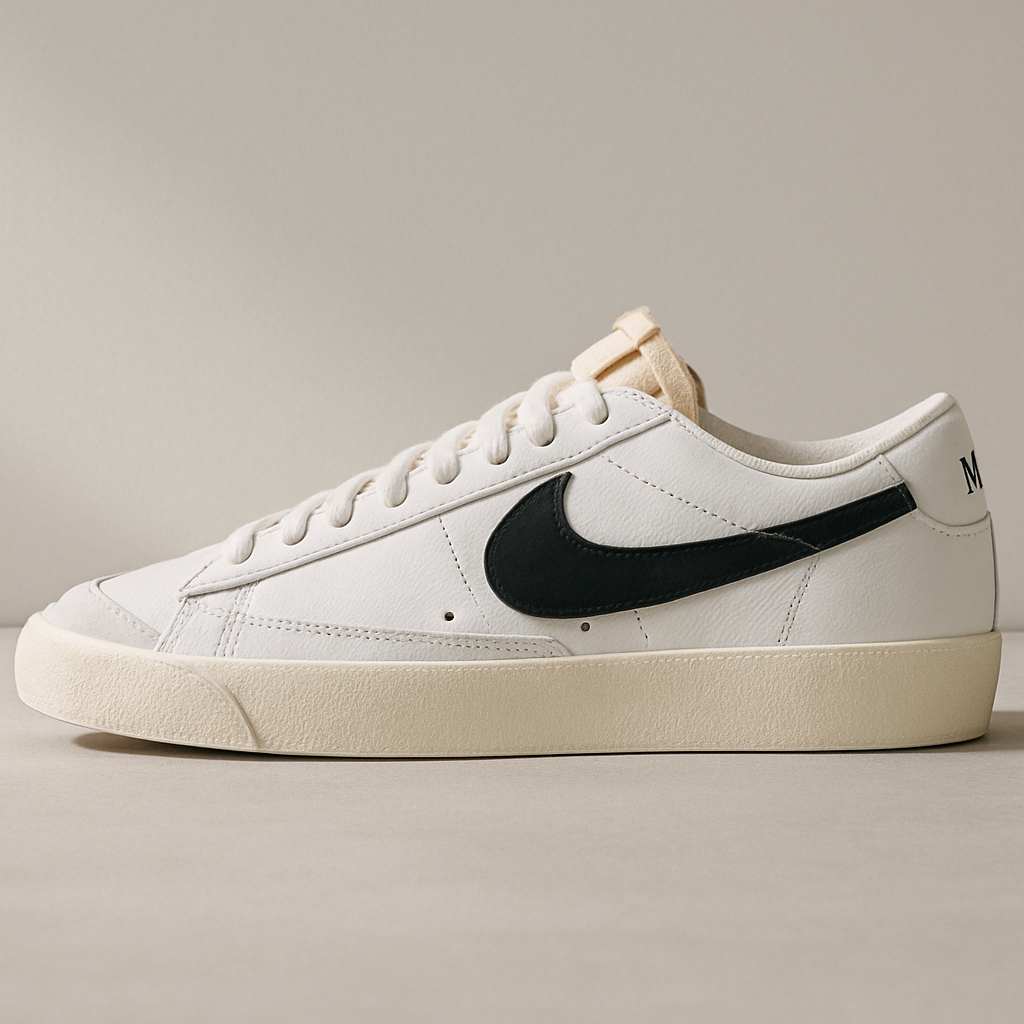
Nike Blazer Low '77 Vintage
All the heritage details in a low‑cut profile. More casual, easier to style with shorts and cropped trousers.
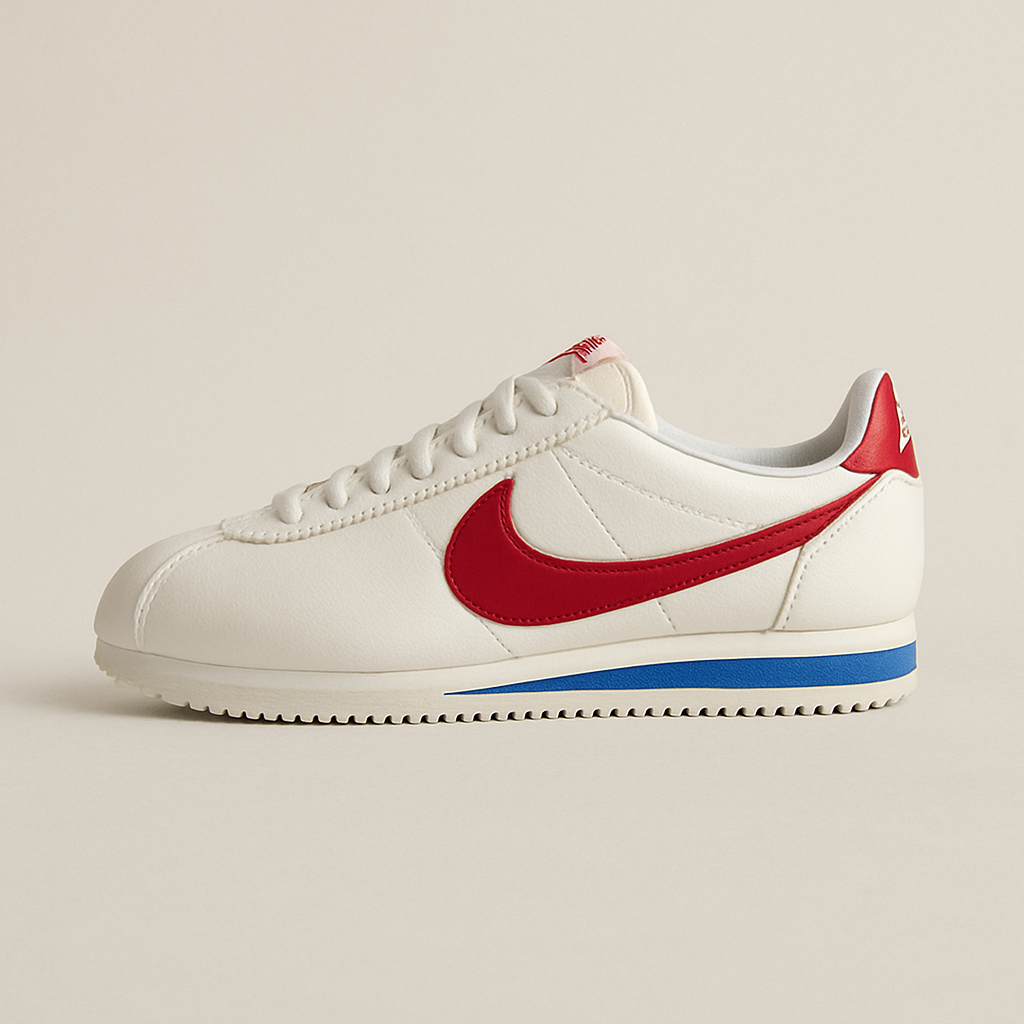
Nike Cortez
Another 1972 Nike original with enduring cultural significance. Running heritage, wedge midsole, different vibe—same era.
Further Reading
- The Complete History of Nike SB Blazer Collaborations
- Behind the Design: Lance Mountain SB Blazer
- Off‑White x Nike: The Ten – How Virgil Abloh Reimagined Ten Icons